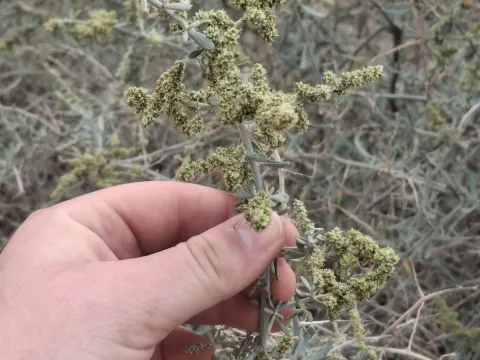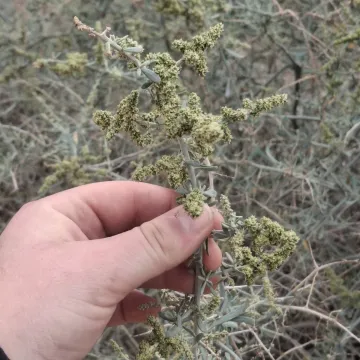
Chenopodium nitrariaceum
Chenopodium nitrariaceum
Description
Chenopodium nitrariaceum is a resilient perennial plant belonging to the Amaranthaceae family, known for its exceptional ability to thrive in challenging, arid, and saline environments. It is a specialized species that plays a critical role in the ecosystems of its native regions, particularly in inland Australia.
The origin of this species is firmly rooted in the semi-arid and arid zones of the Australian continent. It is typically found in floodplains, around salt lakes, and in areas with poor soil quality. Due to its evolutionary history, the plant has developed robust mechanisms to cope with extreme heat and high soil salinity, making it a subject of interest for sustainable agricultural projects.
Botanically, it appears as a woody shrub with a dense branching pattern. The leaves are covered with fine vesicles or hairs that give the plant a grayish appearance, effectively reducing water loss through transpiration. The root system is deep and expansive, allowing the plant to reach moisture reserves far below the surface level, which is vital for survival during prolonged droughts.
Regarding climate and soil requirements, Chenopodium nitrariaceum demands full sun exposure and well-drained, saline, or alkaline soils. It is highly intolerant of waterlogging, which can rapidly lead to root decay. Successful cultivation requires a careful balance of irrigation to prevent salt accumulation from becoming toxic while ensuring the plant receives adequate moisture for biomass production.
Economically, the plant is primarily utilized as a forage resource for livestock in desert climates, providing nutrients when other vegetation is scarce. Ongoing research into the chemical composition of its seeds may eventually lead to new applications in animal feed or even human nutrition. Common pests include foliage-feeding insects, though the plant's high salt content generally acts as a natural deterrent against many generalist herbivore species.
Photo gallery