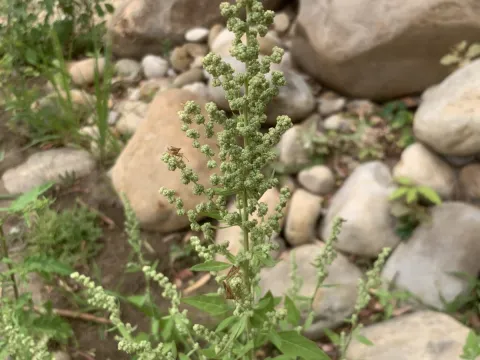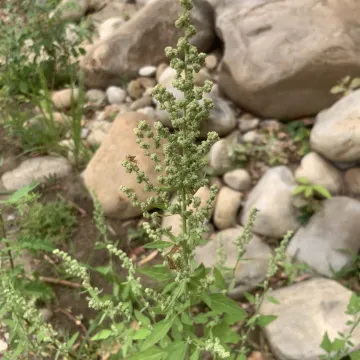

Green goosefoot
Chenopodium viride
Description
Green goosefoot (Chenopodium viride) is an annual herbaceous plant belonging to the Amaranthaceae family. While often categorized as a weed, it holds significant potential as a versatile agricultural crop due to its nutritional density and adaptability to various temperate climate zones across the Northern Hemisphere.
The plant’s origin is traced back to Eurasia, where it adapted to diverse habitats ranging from fertile floodplains to disturbed agricultural lands. Its widespread distribution is a testament to its ecological resilience. It thrives in nitrogen-rich environments, often appearing in cultivated fields, gardens, and along transport corridors, showing a high capacity for rapid biomass accumulation.
Botanically, Chenopodium viride features an erect, branched stem that can reach heights of over one meter. Its leaves are generally rhombic-ovate, often covered in a characteristic mealy powder. The flowering spikes are dense, producing a large volume of small, dark seeds, which facilitates the plant's ability to persist in diverse soil environments through a robust seed bank.
Cultivation requires minimal input, making it a sustainable choice for certain agricultural systems. It prefers full sun and well-drained, nutrient-rich soils. Planting should occur after the final spring frosts to ensure vigorous early growth. Regular weeding in the early stages is essential if grown as a crop, though its rapid growth rate soon allows it to shade out smaller competitors.
In terms of agricultural utility, green goosefoot is primarily valued for its high protein content in green fodder, making it an excellent supplement for poultry and livestock feed. In some cultures, its young leaves are harvested as a leafy vegetable, similar to spinach. Common management challenges include controlling aphids and leaf miners, as well as preventing fungal infections like downy mildew during prolonged periods of high humidity.
Photo gallery