Chinese plumbago
Ceratostigma willmottianum Stapf.
Description
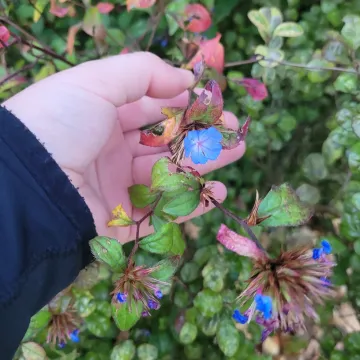
Chinese plumbago (lat. Ceratostigma willmottianum) is a deciduous subshrub belonging to the Plumbaginaceae family. This ornamental plant is highly valued by horticulturists for its late-season blooms that provide intense blue color to the landscape when most other perennials have finished flowering.
Native to western China, specifically Sichuan, the species is naturally adapted to rocky terrain and mountain slopes. This evolutionary history makes it an exceptionally hardy plant suitable for various garden styles, provided the environmental conditions mimic its native rocky habitat.
Botanically, the plant features slender, hairy stems and lance-shaped foliage that often takes on a reddish hue as temperatures drop in autumn. The flowers are distinctively five-petaled, electric blue, and produced in terminal clusters, typically appearing from late summer through the first frosts.
For optimal growth, provide a sunny, sheltered location with well-draining soil. While the plant is drought-tolerant once established, it thrives best in slightly alkaline to neutral soil pH. In colder climates, winter protection such as mulching around the base is recommended to ensure survival of the rootstock.
- Sun exposure: Full sun for maximum flower production.
- Soil type: Light, gritty, and free-draining.
- Watering: Moderate, avoiding waterlogged conditions during winter.
- Pruning: Trim back old growth in spring to encourage fresh shoots.
Common uses include ground cover for rock gardens, low-maintenance borders, or as a feature plant in contemporary landscaping. It is generally free from major pests and diseases, although gardeners should remain vigilant against root rot caused by poor soil drainage.
Photo gallery