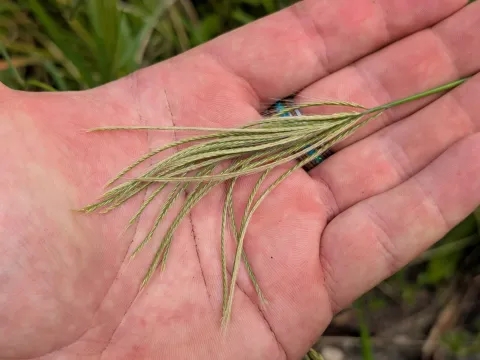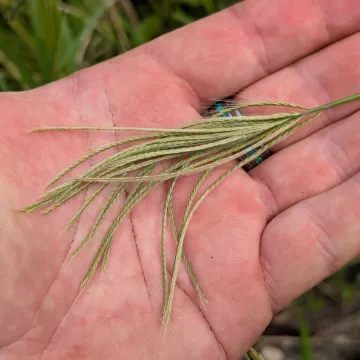
Radiate finger-grass
Chloris radiata
Description
Radiate finger-grass (Chloris radiata) is a perennial herbaceous plant belonging to the Poaceae family. In agricultural science, it is recognized as a forage crop capable of producing high volumes of biomass in tropical and subtropical environmental conditions.
Originating from the tropical regions of the Americas, this species has expanded its range globally. It is now commonly found in various warm-climate regions where it is utilized for soil stabilization and as a nutritional source for livestock grazing, thriving in areas where other forage grasses may struggle to establish.
The botanical structure of the plant features sprawling stems that root at the nodes, forming dense mats. The inflorescences are characterized by radiating, finger-like spikes, which provide the plant with its common name. This morphology supports its role as an effective ground cover, protecting topsoil from wind and water erosion.
Optimal growth is achieved in climates with high temperatures and adequate precipitation. While the plant prefers well-drained, fertile soil, it shows significant adaptability to different soil types, including sandy or slightly acidic conditions. Cultivation success depends on maintaining adequate soil moisture levels while ensuring proper drainage to prevent root rot.
The agricultural and economic utility of radiate finger-grass includes:
- Providing high-quality forage for cattle and other ruminants.
- Serving as a fast-growing ground cover for erosion control.
- Integration into mixed pasture systems to improve land productivity.
The crop is relatively hardy, but it can be susceptible to common grass diseases, such as leaf rust and fungal infections during prolonged rainy periods. Typical insect pests include sap-sucking insects like aphids, which can impact foliage development. Integrated pest management, including regular crop scouting, is recommended for sustainable production.
Photo gallery