Chloris roxburghiana
Chloris roxburghiana
Description
Chloris roxburghiana is a perennial grass species belonging to the family Poaceae. Native to tropical and subtropical regions of Africa, this plant is recognized as a vital forage crop. It plays a significant role in livestock management in arid and semi-arid environments, providing a reliable source of nutrition where other grass species might fail due to environmental stress.
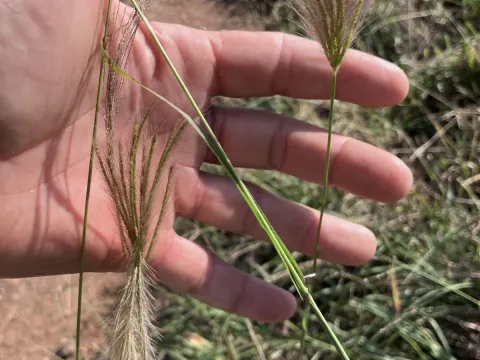
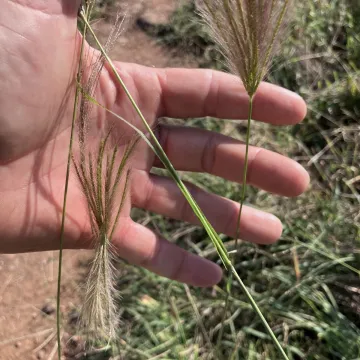
The plant exhibits a bunch-forming growth habit, creating a robust ground cover that helps in erosion control. Botanically, it is identified by its digitate inflorescences—typically consisting of several spikes arranged in a finger-like pattern at the apex of the stem. Its deep root system allows it to access moisture from deeper soil layers, which is a critical adaptation for its survival.
Regarding climatic requirements, this grass thrives in hot environments with distinct wet and dry seasons. It is highly drought-tolerant and can survive prolonged dry spells. While it can grow in a variety of soil types, it performs best on well-drained sandy or loamy soils. It avoids waterlogged areas, which can cause root rot and significantly reduce productivity.
Agricultural management is relatively straightforward. Planting should coincide with the onset of the rainy season to ensure successful establishment. Minimal fertilizer application is usually sufficient to maintain growth, as the plant is adapted to nutrient-poor soils. It is highly resistant to overgrazing if managed with a rotational grazing system, allowing for sufficient recovery periods for the foliage.
The primary agricultural use is as grazing pasture for livestock, though it can also be harvested as high-quality hay. While it is hardy, the crop can be affected by several issues:
- Rust fungi during periods of high humidity.
- Soil-dwelling larvae that may damage the root structure.
- Competition from invasive weeds during the early establishment phase.
Photo gallery