Feather fingergrass
Chloris virgata
Description
Feather fingergrass (lat. Chloris virgata) is an annual grass species belonging to the Poaceae family. In agriculture, this plant is primarily recognized as a troublesome weed that affects crop yields globally. Its ability to rapidly colonize disturbed areas makes it a major concern for farmers managing row crops and pastures.
The species is native to tropical and subtropical regions but has successfully naturalized in temperate zones across the world. It thrives in diverse environments, showing a preference for disturbed sites, roadsides, and fertile agricultural land. Its invasiveness is bolstered by its ability to tolerate diverse soil types, including those with moderate salinity levels.
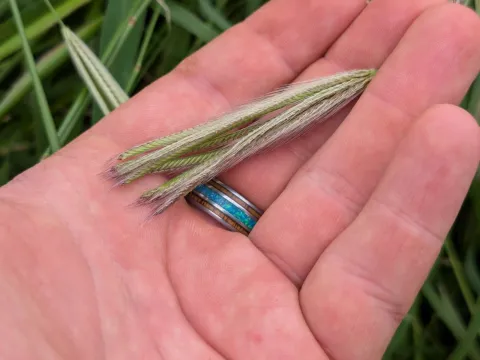
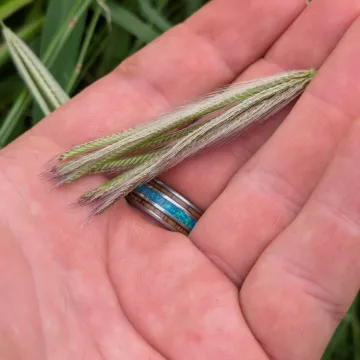
Botanically, it typically grows in tufts, reaching heights of 20 to 60 centimeters. The stems are often ascending, and the leaves are flat and pale green to glaucous. The inflorescence consists of several digitate spikes, which are distinctively fan-shaped. Each plant can produce thousands of seeds, which are easily transported by wind, water, and agricultural equipment.
The agrotechnical management of feather fingergrass requires careful planning. It is highly competitive for water and nitrogen, often outcompeting crops in the early establishment phase. Control strategies must focus on preventing seed set, as the plant can complete its lifecycle in a short timeframe. Integrated pest management, including crop rotation and the use of pre-emergent herbicides, is essential.
While often viewed solely as a pest, feather fingergrass has limited utility in specific pastoral systems where it may provide emergency forage if grazed while young and succulent. However, its negative impact on commercial agriculture significantly outweighs its forage value, as it serves as a host for various diseases and pests that can spread to primary crops like cotton, corn, and grain sorghum.
- Rapid maturation and seed dispersal capabilities.
- High competitive index against narrow-row crops.
- Significant resistance to common glyphosate-based herbicides.
- Broad tolerance to varying soil moisture and fertility conditions.
Photo gallery