Blue grama
Chondrosum gracile
Description
Blue grama (Latin Chondrosum gracile, synonymous with Bouteloua gracilis) is a long-lived perennial grass belonging to the Poaceae family. In agricultural science, it is recognized as a premier forage species for arid and semi-arid rangelands, prized for its exceptional drought tolerance and its ability to provide high-quality grazing in challenging environments.
Native to North America, this grass is a hallmark species of the shortgrass prairies. Its historical range extends across the Great Plains of the United States, Canada, and Northern Mexico. Because of its ecological resilience, it has become a standard choice for reclamation projects, erosion control, and the establishment of sustainable grazing lands in dry regions globally.
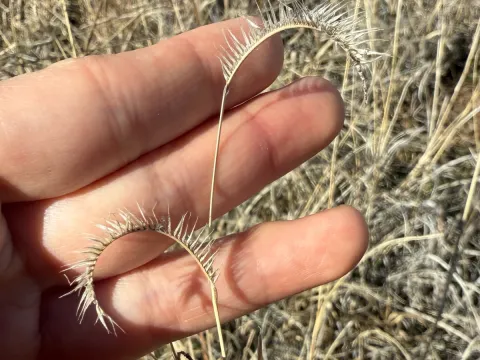
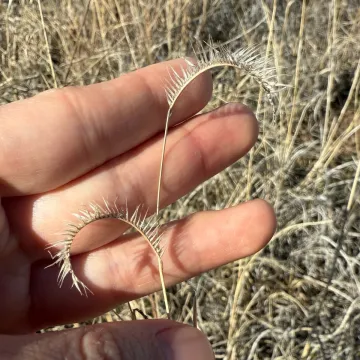
The plant is characterized by a fine-textured, tufted growth habit and a deep, fibrous root system that allows it to persist through severe droughts. The seed heads are distinct, featuring sickle-shaped spikes that are easily recognizable. This morphology allows the plant to stay dormant during extreme heat and moisture stress, resuming growth rapidly when conditions improve.
Agronomically, blue grama thrives in well-drained, sandy to clay-loam soils. It prefers areas with full sun exposure and is highly sensitive to waterlogged conditions, which can lead to rapid decline. Cultivation techniques include shallow seeding depth and management practices that avoid overgrazing, ensuring that the crown of the plant remains intact to support perennial survival.
The main agricultural applications for this crop include:
- providing highly palatable forage for cattle, sheep, and goats;
- utilization as a ground cover for stabilizing disturbed lands;
- integration into drought-resistant pasture mixtures;
- production of livestock feed with high protein content during the summer peak.
While relatively hardy, blue grama can be affected by specific fungal pathogens such as rust and smut when humidity remains high for extended periods. Common insect pests include grasshoppers and certain types of aphids that thrive in dry habitats. Effective management involves integrated pest control and maintaining proper stocking rates to prevent the thinning of the grass stand.
Photo gallery