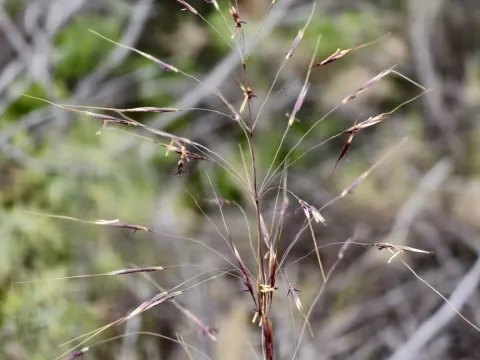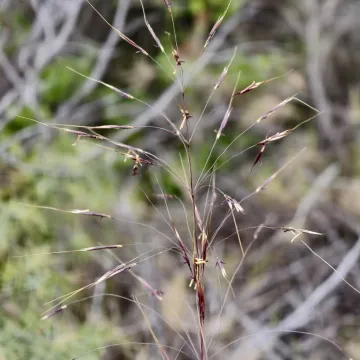
Chrysopogon gryllus
Chrysopogon gryllus
Description
Chrysopogon gryllus, commonly known as Chrysopogon or golden grass, is a perennial plant belonging to the Poaceae family. It is recognized for its exceptional resilience in challenging environments, making it a valuable biological tool for land reclamation and establishing vegetation cover in nutrient-poor and arid regions where other grasses fail to establish.
The plant originates from the warmer regions of Europe, the Caucasus, and parts of Asia. It thrives in open, sunny habitats and is a characteristic species of dry steppes, rocky hillsides, and limestone outcrops. Its distribution is closely linked to its ability to survive high-temperature stress and fluctuating soil moisture levels throughout the growing season.
Botanically, this species forms dense clumps with stiff, upright culms and a deep root system. The name is derived from the distinct golden-bronze hue of the spikelets during the anthesis stage. The foliage is relatively coarse, which serves as a defensive mechanism against water loss, though it also influences the nutritional value of the plant when consumed by livestock.
Agricultural cultivation requires minimal intervention but relies on soil drainage. It is generally undemanding in terms of nutrient input, although light fertilization may enhance vegetative biomass. Agronomists recommend planting it in areas prone to erosion where its root structure can effectively bind the soil. Maintaining a rotational grazing system is essential to ensure that the biomass remains palatable for herbivores.
- Soil stabilization in arid lands.
- Forage production for extensive livestock systems.
- Restoration of degraded pasture ecosystems.
- Use in landscape architecture for xeriscaping.
Regarding health management, the plant demonstrates high resistance to common fungal pathogens, though occasional outbreaks of rust or leaf-spot diseases may occur in excessively humid years. Pests such as cicadas and various grass-feeding beetles are considered potential threats to seed production. Careful monitoring during the flowering stage is recommended for commercial seed harvesting.
Photo gallery