Drooping woodreed
Cinna latifolia
Description
Drooping woodreed (Cinna latifolia) is a perennial grass species belonging to the Poaceae family. This plant is known for its ability to thrive in shaded, moist environments and is recognized for its role in natural ecosystems and potential application in forage crop systems.
The native range of Cinna latifolia extends across the northern regions of the Northern Hemisphere, including North America, Europe, and Asia. It typically occupies habitats such as moist forests, riparian zones, and shady floodplains where organic matter accumulation is high.
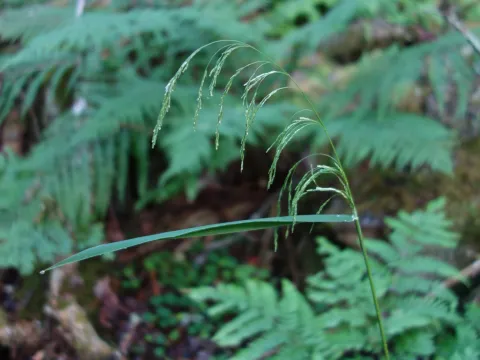
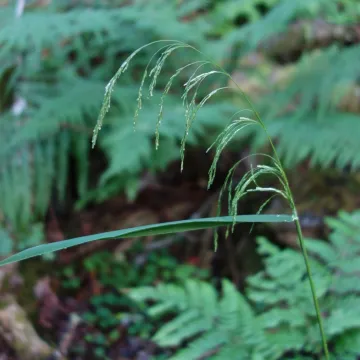
Botanically, the species is distinguished by its loose tufts, tall stems reaching up to 1.5 meters, and broad, flat leaf blades. The inflorescence is a characteristic nodding panicle, which gives the plant its common English name. These features contribute to its identification in natural pastures.
Regarding agrotechnical requirements, the plant prefers deep, moist, and fertile soils. It is highly sensitive to soil moisture deficit and direct solar radiation, making it best suited for sheltered or semi-shaded areas. Maintaining soil health through moderate organic supplementation is essential for sustaining long-term yields.
The primary agricultural use of drooping woodreed is as a component of natural forage. Livestock find the young foliage palatable, which makes it an important grass for extensive grazing systems. Research into its cultivation often focuses on its compatibility with other moisture-loving forage grasses.
Common plant health issues include fungal pathogens such as rusts and powdery mildew, which are often encouraged by high humidity and poor air circulation within the stand. Pests such as cereal aphids and stem-boring insects may also affect the crop; however, proactive field management usually keeps these populations under control.
Photo gallery