Winged thistle
Cirsium alatum
Description
Winged thistle (Latin: Cirsium alatum) is a biennial herbaceous plant belonging to the Asteraceae family. In agricultural science, it is recognized as a persistent weed that exhibits significant resilience, allowing it to compete effectively with cultivated crops for space, water, and essential soil nutrients.
The plant is native to parts of Southeastern Europe and Western Asia. Its distribution area includes natural habitats such as riverbanks, meadows, and forest edges, as well as degraded agricultural lands. Due to its biological plasticity, it easily colonizes abandoned fields and pastures, posing a challenge to landowners and farmers who aim to maintain high productivity levels.
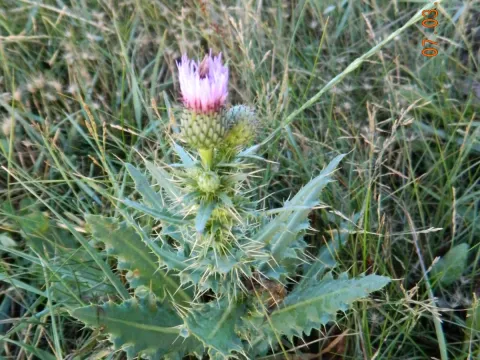
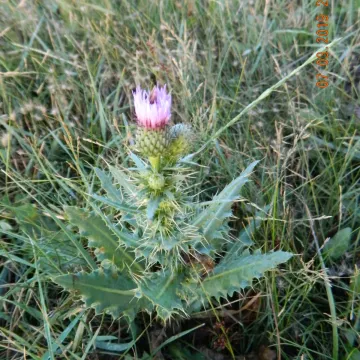
Botanically, the winged thistle is distinguished by its robust stem featuring distinctive wing-like appendages that run along its length, which is the primary trait for its identification. The leaves are typically lanceolate, serrated, and armed with sharp spines. These physical defenses, combined with a deep root system, enable the plant to survive in varying soil conditions and drought periods.
When considering agronomic requirements, the winged thistle thrives best in moist, nutrient-rich soils. Effective management in an agricultural setting usually requires an integrated approach.
- Mechanical removal of the taproot during the first year of growth.
- Application of selective herbicides when the plant is in the rosette stage.
- Implementation of crop rotation to break the weed's life cycle.
Regarding its utility and risks, the winged thistle is generally avoided in production fields. However, it supports various biodiversity factors as a late-season nectar source. Farmers must be aware that this plant often acts as a host for pests like aphids and various fungal pathogens, which can migrate from the thistle to nearby crops, necessitating constant field monitoring to prevent potential yield loss.
Photo gallery