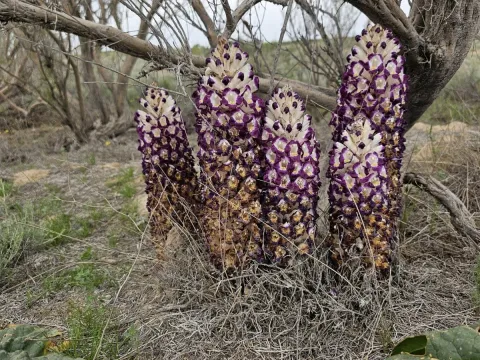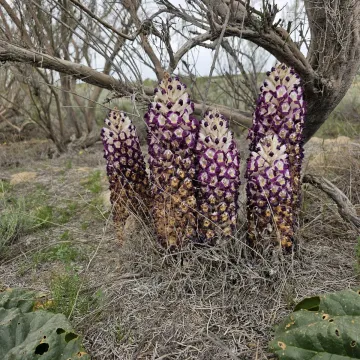
Cistanche salsa
Cistanche salsa
Description
Cistanche salsa is a perennial parasitic herbaceous plant belonging to the Orobanchaceae family. As an obligate parasite, it lacks chlorophyll and survives by drawing water and nutrients from the roots of desert host plants, primarily Haloxylon and Tamarix species. Known globally in traditional medicine, it is frequently referred to as "desert ginseng" due to its potent physiological effects.
The plant originates from the arid and semi-arid regions of Central Asia, specifically across China, Mongolia, and Kazakhstan. Its natural habitat includes saline-alkali soils, sandy deserts, and Gobi regions. In recent years, it has become a significant industrial crop, cultivated on a large scale to meet the high demand for its pharmaceutical properties while simultaneously aiding in desertification control.
Botanically, the plant features a fleshy, succulent stem covered with scale-like leaves. Its reproductive phase results in a dense, spike-like inflorescence with yellowish or purple flowers that rise above the sand. The underground portion develops specialized structures known as haustoria, which penetrate the host's root system, creating a permanent connection for nutrient transfer.
Cultivation requires extreme climatic adaptation, characterized by high temperatures, intense sunlight, and low precipitation. The agricultural process involves artificial inoculation of host roots with Cistanche seeds. Soil conditions must be sandy with excellent drainage; excessive moisture is detrimental to both the host and the parasite, potentially leading to root decay or fungal diseases.
The primary use of Cistanche salsa is in the pharmaceutical industry for producing health supplements. It is rich in phenylethanoid glycosides, which are known for their anti-inflammatory, neuroprotective, and antioxidant properties. While generally resistant to common garden pests, the crop can be susceptible to specific soil nematodes and subterranean root rot, which are managed primarily through strict environmental control and rotation of host plant density.
Photo gallery