Hoary rock-rose
Cistus canescens
Description
Hoary rock-rose (Cistus canescens) is a perennial evergreen subshrub belonging to the Cistaceae family. Renowned for its resilient nature and aesthetic appeal, this plant is a staple in Mediterranean-style landscaping and rock gardens, where it thrives despite challenging environmental conditions.
The origin of Cistus canescens is rooted in the Mediterranean region, where it naturally occupies dry, rocky, and sun-exposed habitats. Its evolutionary history has made it a model of drought adaptation, allowing it to maintain vigorous growth in climates characterized by hot, dry summers and cool, moist winters.
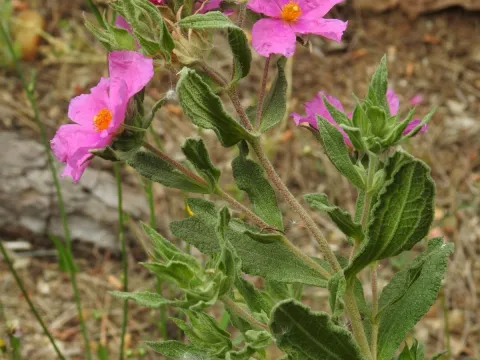
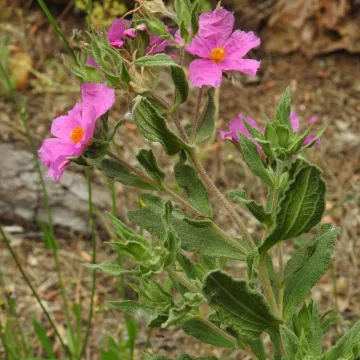
Botanically, the plant is distinguished by its small, greyish-green leaves covered in fine hairs, which give the plant its characteristic hoary appearance. The flowers are typically pink or purple with delicate, crinkled petals that bloom throughout the late spring and summer months, adding significant color value to any planting scheme.
Agronomic requirements for this species are specific: it mandates exceptionally well-draining soil, ideally of a sandy or gravelly composition. It is poorly suited for heavy clay soils where moisture retention can be fatal to the roots. The plant requires minimal fertilization and prefers full sun exposure to maintain its compact shape and floral density.
In terms of management, the main focus should be on proper drainage and avoiding excessive irrigation. Regarding phytosanitary issues, the plant is relatively hardy but can be susceptible to fungal pathogens like Phytophthora if the soil remains waterlogged. Controlling sap-sucking insects like aphids during the early growth stages is essential for maintaining plant vigor.
Photo gallery