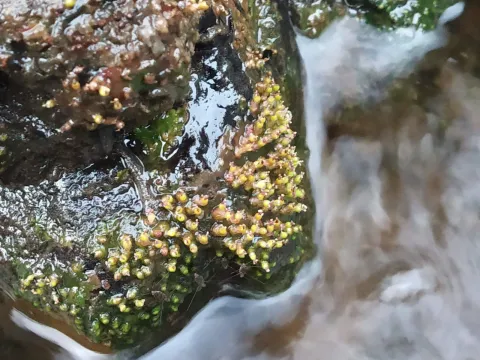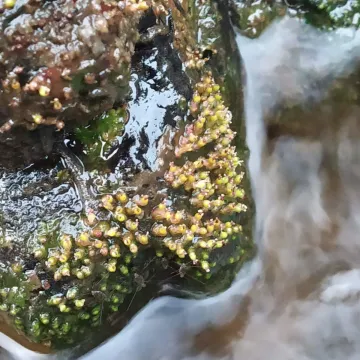
Cladopus hookeriana
Cladopus hookeriana
Description
Cladopus hookeriana is a fascinating aquatic plant species belonging to the Podostemaceae family. This plant is a specialized rheophyte, meaning it has evolved to thrive in high-velocity water currents, anchoring itself firmly to rocky substrates in riverbeds, which makes it a unique subject of botanical study rather than a standard commercial crop.
The native range of this species is primarily located in the tropical regions of Asia, specifically within the river systems of India. These environments provide the necessary conditions for survival: fast-flowing, oxygen-rich, and clear water, which are essential for the plant's metabolic processes and overall growth cycle.
The morphology of Cladopus hookeriana is highly adapted to its environment. It lacks conventional stems and broad leaves, instead presenting a thallus-like structure that flattens against rocks to minimize drag caused by the water current. This structural adaptation allows it to remain attached even during flash floods and heavy seasonal river fluctuations.
In terms of cultivation and agrotechnics, there are no established farming practices for Cladopus hookeriana. As a wild-growing species, it is entirely dependent on its natural habitat. It cannot be cultivated in typical fields or greenhouses, as it requires the constant flow and specific water chemistry found only in its native mountain or rainforest streams.
Regarding its ecological importance, the plant serves as a critical bio-indicator for river health. Because it is highly sensitive to water pollution, sedimentation, and temperature changes, the presence of Cladopus hookeriana is often used by researchers to assess the pristine state of freshwater ecosystems. Conservation efforts are currently focused on protecting its natural habitat from industrial and agricultural runoff.
Photo gallery