
Miner's lettuce
Claytonia perfoliata Donn ex Willd.
Description
Miner's lettuce (Claytonia perfoliata), also known as spring beauty, is an annual herbaceous plant belonging to the Montiaceae family. It is highly regarded as a cold-hardy salad green that thrives in damp, shady conditions, providing fresh produce when other crops fail to grow.
The plant originates from the mountainous and coastal regions of Western North America. It earned its common name during the California Gold Rush, where miners harvested the plant as a fresh vegetable to prevent scurvy. Today, it is cultivated worldwide, particularly in small-scale vegetable gardens and by gourmet salad producers.
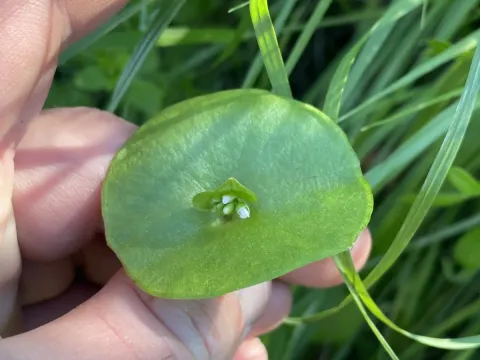
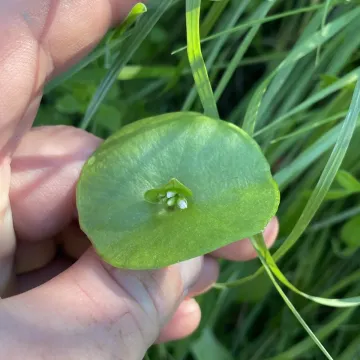
Botanically, it is characterized by its succulent, edible leaves. The basal leaves are long-petioled, while the stem leaves are fused together to form a distinctive perfoliate disc around the stem, which gives the species its scientific name. The plant produces small, white or pinkish flowers that are typically self-pollinating.
For optimal growth, Claytonia requires a cool climate and fertile, moisture-retentive soil. It is a classic cool-season crop that struggles in intense heat. When temperatures exceed 20°C (68°F) or days become very long, the plant quickly shifts its energy toward flowering and seed production, resulting in tougher leaves and a bitter aftertaste.
Miner's lettuce is primarily used fresh in salads. Its leaves are mild, slightly crunchy, and very nutrient-dense, containing high levels of vitamin C, omega-3 fatty acids, and antioxidants. Successful cultivation typically involves these essential practices:
- Sowing seeds in early spring or autumn for a winter harvest.
- Keeping the soil consistently moist but well-drained.
- Thinning seedlings to prevent overcrowding and fungal issues.
- Harvesting individual leaves regularly to encourage new growth.
The crop is relatively pest-free compared to other brassicas; however, it can be susceptible to slugs and snails, which enjoy the succulent foliage. Proper site selection, such as partial shade, and maintaining good soil drainage are generally sufficient to manage most disease risks and ensure a high-quality yield throughout the season.
Photo gallery