
Addison's clematis
Clematis addisonii
Description
Addison's clematis (Clematis addisonii) is a distinct, herbaceous perennial belonging to the Ranunculaceae family. Unlike common vining clematis, this species grows as a low-mounded or semi-erect shrub, making it a unique addition to specialty gardens that do not accommodate large climbing structures.
The plant is native to the eastern United States, specifically found in the states of Virginia and North Carolina. Its natural habitat is typically rocky, limestone-rich slopes and open woodlands, which dictates its specific horticultural needs regarding soil chemistry and drainage requirements.
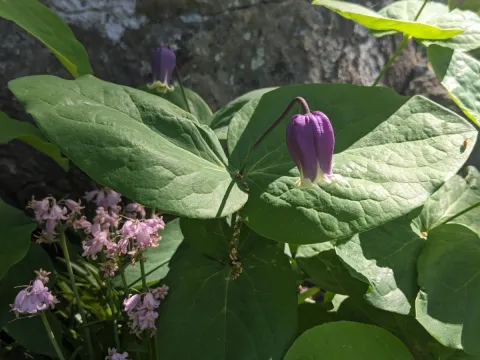
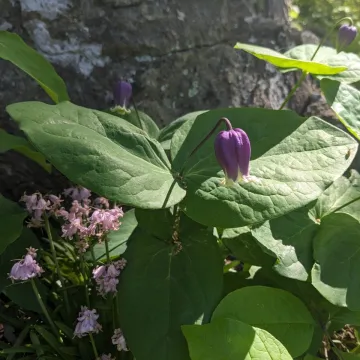
Botanically, this species is recognized by its leathery, glaucous leaves and unique urn-shaped flowers. The blossoms feature thick, semi-fused sepals that are deep reddish-purple on the exterior and creamy-white on the inside. The plant produces these nodding, bell-shaped flowers in late spring and early summer.
Successful cultivation requires a well-drained, neutral to alkaline soil with high mineral content. It thrives in sunny locations but benefits from some protection from the intense midday sun. Proper soil preparation is essential, as the root system is sensitive to waterlogging, which often leads to crown rot in heavy clay soils.
Maintenance includes light mulching to maintain soil moisture and periodic fertilization during the growing season. While generally hardy, the plant is susceptible to common clematis pests such as aphids and diseases like powdery mildew or wilt. In the landscape, it is ideally suited for rock gardens, borders, and as a low-growing specimen in native plant collections.
Photo gallery