Clematis apiifolia
Clematis apiifolia
Description
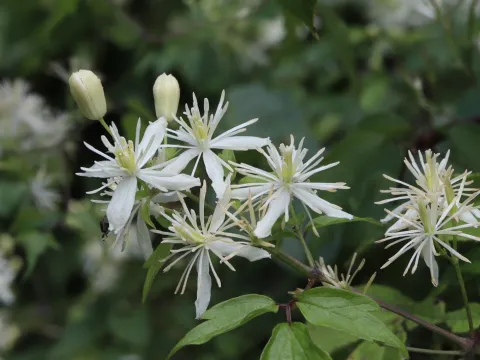
Clematis apiifolia, commonly known as the celery-leaved clematis, is a perennial woody climber belonging to the Ranunculaceae family. Distinguished by its vigorous growth habit and distinctively divided, celery-like foliage, this species is highly valued in horticulture for its dense, lacy appearance and abundant small, creamy-white flowers that bloom in the late summer.
The plant originates from East Asia, with a natural distribution covering regions in China, Korea, and Japan. It thrives in diverse environments, typically found in woodland edges, slopes, and thickets where it can utilize shrubs and trees as natural supports to reach sunlight. Its adaptability has allowed it to become a staple in many temperate-zone gardens.
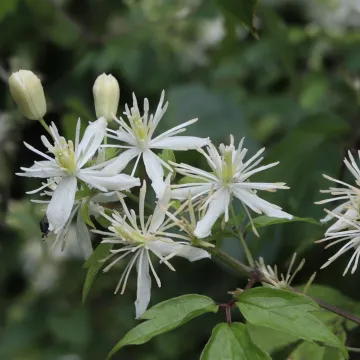
Botanically, Clematis apiifolia features opposite, compound leaves with serrated margins. The plant utilizes sensitive leaf stalks (petioles) to coil around supports, allowing it to climb efficiently. The flowers are small, fragrant, and typically produced in panicles. After flowering, the plant develops silky seed heads that add a secondary ornamental interest during the autumn season.
For successful cultivation, this species requires a location with rich, well-draining soil and a preference for cool root runs. Providing shade at the base of the plant while allowing the top growth to reach sunlight is ideal for plant health. Regular irrigation during the growing season and the provision of a sturdy trellis or fence are essential for supporting its rapid vertical expansion.
In terms of agricultural and landscape usage, Clematis apiifolia is primarily utilized for its structural beauty in vertical gardening. It is excellent for screening, covering pergolas, and softening hardscape features. While not typically grown as a commercial food crop, it remains a popular choice for ornamental purposes due to its hardiness and reliable flowering cycle.
- Requires annual pruning to manage size and density.
- Prefers neutral to slightly alkaline soil pH.
- Propagation is best achieved through semi-hardwood cuttings.
- Sensitive to waterlogged conditions which can induce root rot.
Common plant health issues include fungal wilts and powdery mildew, particularly in sites with poor air circulation. Pests such as aphids and spider mites can occasionally affect the foliage, but these can be managed through good garden hygiene and, if necessary, the application of horticultural soaps or specific treatments.
Photo gallery