Field clematis
Clematis campestris
Description
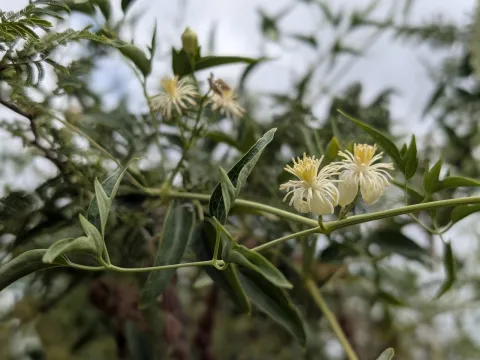
Field clematis (Clematis campestris) is a perennial climbing plant belonging to the Ranunculaceae family. It is a resilient species known for its ability to thrive in open, sunny environments, distinguishing itself from the more delicate large-flowered garden hybrids often found in commercial horticulture.
Native to the temperate and subtropical regions of South America, particularly Argentina and parts of Chile, this plant has adapted to the fluctuating moisture levels characteristic of plains and grasslands. Its natural habitat suggests a high tolerance for exposure and a strong, woody growth habit that supports its climbing nature in the wild.
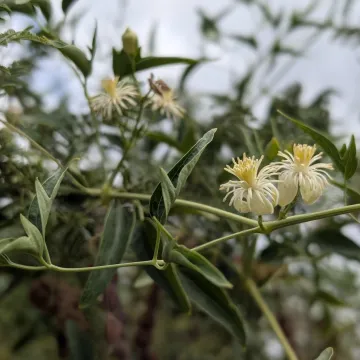
Botanically, Clematis campestris features woody stems at the base that transition into flexible, vigorous vines. The leaves are compound and provide excellent foliage density, while the flowers are typically modest in size but appear in profuse clusters, creating a naturalistic, delicate aesthetic when in full bloom during the active growing season.
In terms of agricultural requirements, the plant demands well-drained soil rich in organic matter to support its rapid growth. It requires a sunny position to produce the best flowering results. Maintenance involves early-season pruning to remove dead growth, consistent watering during the establishment phase, and the provision of sturdy vertical structures for the vines to latch onto.
This species is widely used for landscape architecture, particularly for covering fences, trellises, and natural hedges. Gardeners should monitor for common pests such as aphids and spider mites, and be vigilant against fungal diseases like powdery mildew, which can occur if airflow around the foliage is restricted by overcrowded planting conditions.
Photo gallery