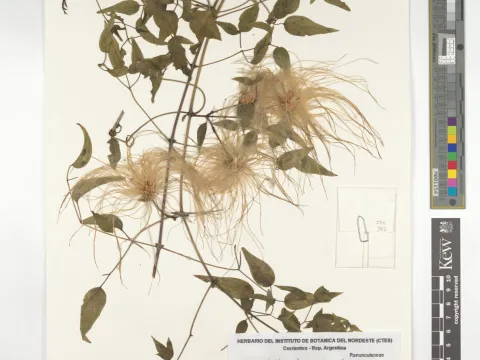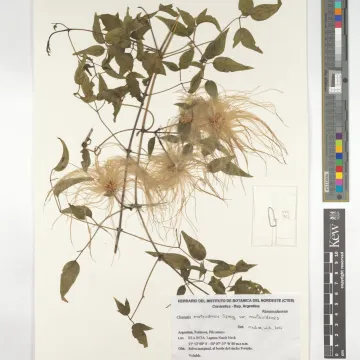

Clematis montevidensis
Clematis montevidensis
Description
Clematis montevidensis is a woody perennial climbing vine belonging to the Ranunculaceae family. It is widely recognized in horticultural circles for its rapid growth rate and ability to act as a vigorous climber, making it an excellent candidate for covering pergolas, fences, and walls in appropriate climates.
The plant originates from South America, specifically in regions encompassing Uruguay and parts of Argentina. Within its native habitat, it thrives in temperate to subtropical climates, often found scaling natural supports in semi-shaded to sun-exposed environments where moisture is consistently available.
Botanically, the plant displays compound leaves with petioles that act as tendrils, allowing the vine to anchor itself securely to structures. The floral display typically reflects the distinct characteristics of the Clematis genus, often producing clusters that enhance the plant's ornamental appeal during the peak flowering season.
Successful cultivation requires a fertile, loamy soil profile with excellent drainage capabilities to prevent root rot. It is essential to maintain a neutral to slightly alkaline soil pH. During the initial growth phase, the vine requires consistent irrigation and support, while the root zone benefits significantly from organic mulch to retain coolness.
In terms of maintenance, periodic pruning is necessary to manage the vigorous growth and encourage denser branching. Common pests such as aphids and spider mites can affect the foliage, while fungal issues like powdery mildew may occur in poorly ventilated areas. Regular monitoring and integrated pest management are recommended to ensure the longevity of the vine.
Photo gallery