Netleaf leather flower
Clematis reticulata
Description
Netleaf leather flower (Clematis reticulata) is a perennial climbing vine belonging to the Ranunculaceae family. This species is easily recognized by the prominent, net-like venation on its leaves, which provides it with a distinct appearance compared to other clematis species. It is a highly valued plant for those seeking to incorporate unique, native-looking foliage and subtle floral forms into their garden landscapes.
Originating from the southeastern United States, this species thrives in native habitats such as woodlands, forest margins, and shrubby areas. It prefers regions with mild climates where seasonal changes are not overly aggressive. Due to its specific environmental requirements, it is mostly cultivated in temperate zones that allow the vine to establish its root system and maintain vigor over several growing seasons.
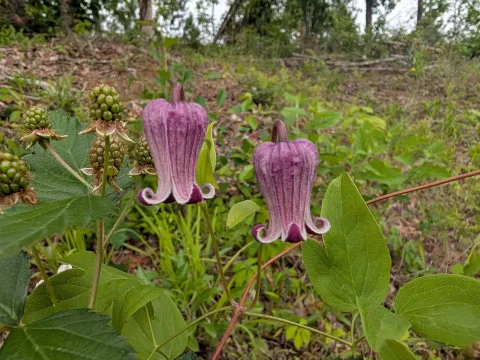
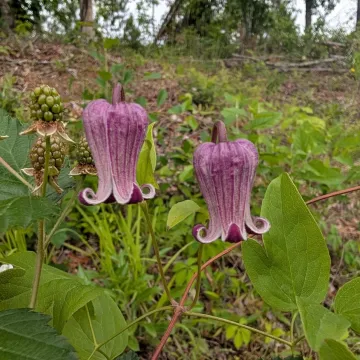
Botanically, the plant is characterized by its slender, twining stems and bell-shaped, often dull-colored flowers that range from greenish to purplish hues. The foliage is thick and leathery, providing a robust texture. One of its most interesting features is the development of plumose, feathery achenes after flowering, which not only serve as a mechanism for wind dispersal of seeds but also add late-season visual interest.
Cultivation requires well-drained, fertile soil with a neutral to slightly acidic pH level. The plant benefits from a sunny to partially shaded position and must be provided with adequate support structures such as trellises or wires to promote healthy vertical growth. Mulching the base is strongly recommended to maintain consistent soil moisture and keep the root zone cool, which is critical for the overall health of the specimen.
In landscape use, it is a perfect candidate for covering fences, trellises, and other garden structures. Gardeners should be vigilant against common threats like powdery mildew, clematis wilt, and aphids. Maintenance includes regular monitoring, judicious pruning to prevent overcrowding, and timely applications of fungicides or organic insecticidal soaps if signs of infestation occur, ensuring the plant remains both healthy and attractive.
Photo gallery