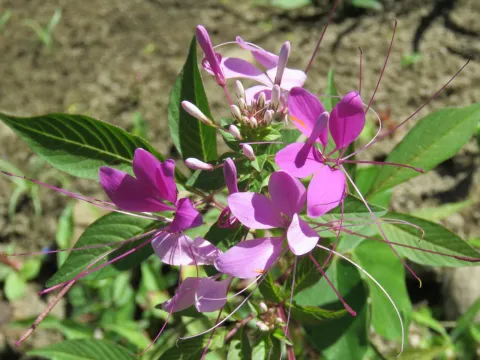

Cardinal spider flower
Cleome cardinalis
Description
The Cardinal spider flower (Cleome cardinalis) is a distinct member of the Cleomaceae family, renowned for its vivid, intense red blossoms and spider-like stamens. As an ornamental plant, it serves as a focal point in landscapes, providing a splash of high-contrast color that thrives in challenging, hot conditions.
Native to the arid environments of Northern Mexico and the Southwestern United States, this species is well-adapted to high temperatures and intense solar radiation. Its evolutionary history has made it a resilient candidate for xeriscaping and sustainable gardening, where minimal water input is a key design requirement.
Botanically, Cleome cardinalis features tall, erect stems covered with compound, palmate leaves. The inflorescences are produced in terminal racemes, where the long, protruding stamens give the flower its signature appearance. The plant typically reaches a height of 60 to 100 centimeters, making it suitable for middle-to-back borders in garden beds.
Agricultural requirements include a sunny location with well-draining soil. While it is drought-tolerant once established, supplemental watering during prolonged dry spells significantly enhances flowering density. It is best grown in sandy or loamy soil types; heavy clay soils should be amended with organic matter to improve drainage and root penetration.
Maintaining plant health requires vigilance against common garden pests and environmental stressors. Key management practices include:
- Monitoring for aphids, which often colonize the flower buds.
- Preventing root rot by ensuring soil porosity and avoiding water stagnation.
- Applying systemic treatments if spider mites appear in hot, dry conditions.
- Regular pruning of spent flower heads to encourage secondary blooming cycles.
Photo gallery