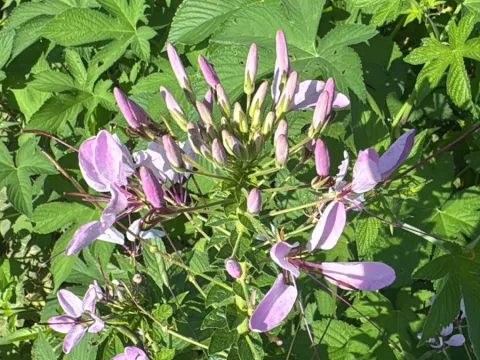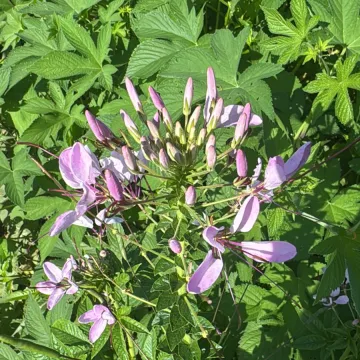
Spider flower
Cleome hassleriana
Description
Cleome hassleriana, commonly known as the spider flower, is a distinctive ornamental annual belonging to the family Capparaceae. It is widely cultivated for its unique, multi-flowered racemes that feature long, protruding stamens, creating an explosive, spider-like appearance. The plant typically reaches heights of 0.8 to 1.5 meters, characterized by strong stems and aromatic, palmate leaves.
Native to the tropical regions of South America, specifically Argentina, Brazil, and Paraguay, the plant has become a staple in ornamental horticulture globally. It is classified as an annual in cooler climates but demonstrates vigorous growth during the warm summer months. Its adaptation to various environments has made it a preferred choice for large-scale landscaping and private gardens alike.
Botanically, the species is known for its rapid biomass accumulation and prolonged flowering period, which lasts from mid-summer until the first frost. The leaves are compound, typically with 5–7 leaflets. The plant produces a significant amount of nectar, making it an excellent resource for pollinators, which is a key factor in its ecological role in garden ecosystems.
Agronomic requirements include full sun exposure and well-draining, moderately fertile soil with a near-neutral pH level. While the plant is somewhat drought-tolerant once established, optimal growth requires consistent moisture and protection from strong winds that could break the stems. Regular fertilization is recommended for container or mass-planted cultivation to maintain continuous bloom development.
- Requires full sun (minimum 6–8 hours daily).
- Well-drained soil prevents root rot issues.
- Spaced 30–45 cm apart to ensure airflow.
- Regular deadheading promotes secondary flowering.
Regarding health management, the plant is relatively robust but can be prone to specific challenges. Common pests include aphids and spider mites, particularly in hot, dry conditions. Diseases such as powdery mildew or root rot may occur if the planting site lacks proper drainage or air circulation. Sustainable pest management and proper site selection are the primary tools for ensuring a healthy crop.
Photo gallery