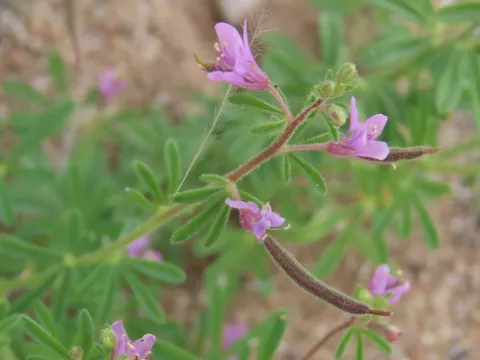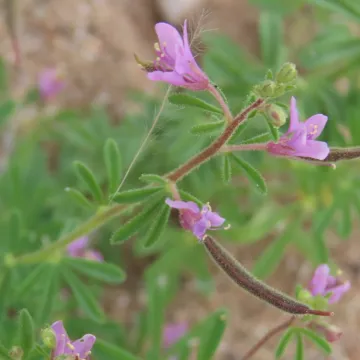
Cleome rubella
Cleome rubella
Description
Cleome rubella is an annual herbaceous plant belonging to the Capparaceae family. In agronomic terms, it is recognized for its specialized adaptation to arid and semi-arid environments, making it a distinct subject of study in botanical and decorative plant research.
The plant originates from regions characterized by low precipitation and sandy substrate conditions. Over time, it has established its presence in various warm-temperate zones. Its natural habitat dictates its physiological resilience, allowing it to thrive where other standard horticultural crops might struggle due to moisture stress.
Botanically, Cleome rubella is distinguished by its upright architecture, complex foliage, and striking terminal racemes. The flowers are notable for their elongated stamens, which contribute to a unique floral presentation. The root system is deep-reaching, providing the stability necessary for survival in wind-prone, open fields.
Agronomic requirements for this species are specific: it necessitates well-aerated, sandy soil with minimal moisture retention to prevent root rot. Sunlight is the primary factor for growth, as the plant exhibits photophilic behavior. Proper spacing is essential to ensure air circulation and reduce the incidence of humidity-related pathogens.
The primary utility of the plant lies in horticulture and landscaping. Its role as a drought-tolerant ornamental is growing, particularly in regions facing water scarcity. While not a conventional staple crop, it serves as a valuable resource for biodiversity in xeriscaping projects and experimental garden designs.
- High drought tolerance.
- Preference for sandy, well-drained soils.
- Sun-loving habit with minimal shade tolerance.
- Resilience to extreme heat.
Photo gallery