Koster's curse
Clidemia hirta (L.) D. Don
Description
Clidemia hirta, commonly known as Koster's curse, is a perennial shrub belonging to the Melastomataceae family. While it possesses certain botanical interest, it is primarily recognized in international agriculture as a highly invasive and destructive weed, posing a severe threat to biodiversity and agricultural productivity in tropical and subtropical regions.
Native to the tropical regions of Central and South America, this plant has spread aggressively across the Pacific Islands, Southeast Asia, and parts of Africa. It is widely considered a pest that thrives in disturbed habitats, invading agricultural plantations, pastures, and native forests, where it forms dense, impenetrable thickets that choke out indigenous and cultivated vegetation.
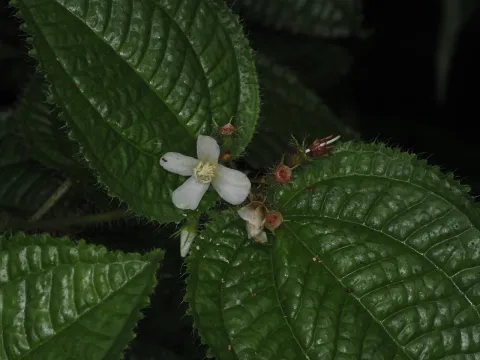
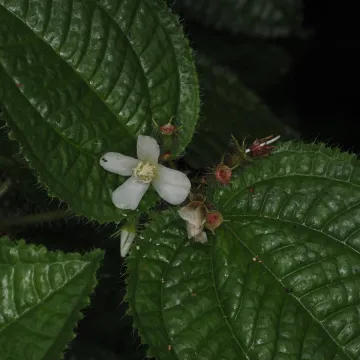
The morphology of Clidemia hirta is characterized by its stems, which are covered in stiff, reddish-brown hairs. The leaves are opposite and have prominent parallel veins. The plant produces small white flowers and succulent dark-purple to black berries. These berries are highly attractive to birds, which facilitate the rapid long-distance dispersal of seeds across fragmented landscapes.
In terms of environmental requirements, Koster's curse is remarkably versatile. It tolerates a wide spectrum of light conditions, ranging from direct sun to deep shade, and thrives in high-humidity climates. It prefers moist, fertile soils but can colonize nutrient-poor sites, making it an extremely resilient species in both natural and agricultural ecosystems.
Management and control of Clidemia hirta represent a significant agricultural challenge. Because the plant produces such large volumes of long-lived seeds, complete eradication requires sustained effort. Effective strategies often incorporate:
- Manual removal of seedlings to prevent establishment.
- Strategic application of herbicide treatments to dense patches.
- Biological control programs using specialized insects, such as the thrips Liothrips urichi.
Photo gallery