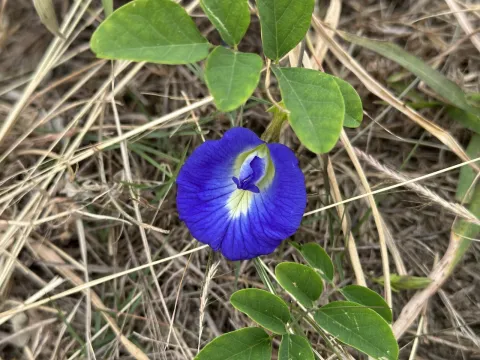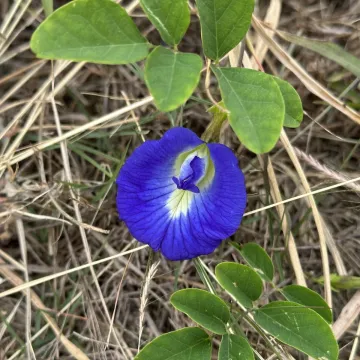

Butterfly pea
Clitoria ternatea L.
Description
Butterfly pea (lat. Clitoria ternatea L.) is a perennial herbaceous plant from the Fabaceae family. Known for its vivid blue petals and rapid growth, it has gained global popularity as an ornamental, food-grade, and medicinal crop throughout the tropical world.
The plant originates from equatorial Asia, specifically the tropical regions of Southeast Asia. It is now widely distributed across India, Africa, and parts of the Americas. It thrives in high-humidity environments and requires significant solar exposure to maximize flower production, which is the most economically important part of the plant.
Botanically, it is a climbing legume with pinnate leaves and distinctive papilionaceous flowers. A key feature is its nitrogen-fixing capacity through root nodules, which classifies it as an excellent soil enhancer. Its growth cycle is rapid, allowing for multiple harvests of flowers and leaves during a single growing season in favorable climates.
Cultivation requires fertile, well-drained loamy soils with an optimal pH range of 5.5 to 7.0. Because it is highly sensitive to frost, it must be grown in greenhouses in temperate zones. Proper management involves providing trellises or supports to facilitate climbing, regular irrigation, and moderate applications of phosphorus-rich fertilizers to boost flowering.
Main хозяйственное applications of the crop include:
- Production of blue herbal tea, known for its high content of anthocyanins.
- Extraction of natural blue dyes for the food and beverage industry.
- Use in Ayurvedic and traditional medicine for cognitive enhancement and stress relief.
- Utilized as a high-protein forage crop for livestock and as a green manure for agriculture.
The plant is relatively resistant, but can be susceptible to pests such as spider mites, aphids, and whiteflies in dry conditions. Fungal diseases, particularly root rot, can occur if the soil is poorly drained. Integrated pest management and maintaining proper spacing to ensure airflow are essential practices for a healthy crop yield.
Photo gallery