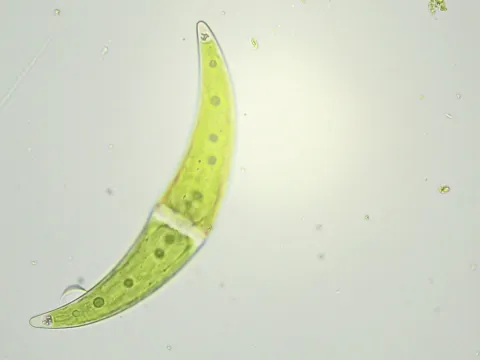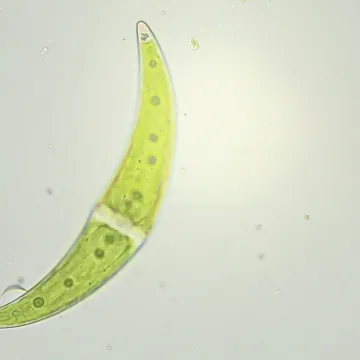

Closterium moniliferum
Closterium moniliferum
Description
Closterium moniliferum is a prominent species of freshwater microalgae belonging to the family Desmidiaceae. These unicellular organisms are well-recognized for their distinctive crescent-shaped cells, which exhibit complex internal organization. As eukaryotic algae, they are vital components of aquatic food chains, serving as primary producers in diverse freshwater environments.
The species has a broad global distribution, thriving in habitats ranging from temporary pools and bogs to permanent freshwater lakes. They typically prefer stagnant or slow-moving water bodies with slightly acidic conditions. Their ability to survive in fluctuating environmental conditions makes them a hardy subject for research and industrial applications.
Morphologically, each cell is composed of two symmetrical semi-cells separated by a central isthmus containing the nucleus. The chloroplasts within the cells are highly efficient at photosynthesis, leading to the accumulation of starch granules. This high carbohydrate content is a key botanical trait that attracts researchers looking for sustainable sources of biomass.
Cultivation of Closterium moniliferum requires precise agrotechnical control. In a laboratory or industrial setting, it is essential to manage light intensity, temperature (ideally between 18°C and 25°C), and nutrient supply. The growth medium should be balanced with essential macro- and micronutrients, ensuring optimal carbon dioxide diffusion and proper oxygenation to sustain rapid growth rates.
The main economic and practical uses for this species include its potential as a source of biofuels, nutritional supplements, and high-value biochemicals. Furthermore, Closterium moniliferum acts as a sensitive bioindicator of water quality; its presence and growth rates can signal changes in the chemical balance of a freshwater ecosystem, making it valuable for environmental monitoring programs.
Typical challenges in managing this crop include:
- Contamination by competing algae species.
- Susceptibility to viral or fungal pathogens that can collapse cultures.
- Inhibition of photosynthesis due to nutrient imbalance.
- Maintenance of strict pH levels to ensure maximum physiological efficiency.
Photo gallery