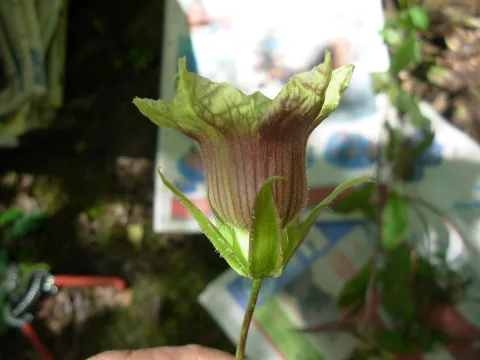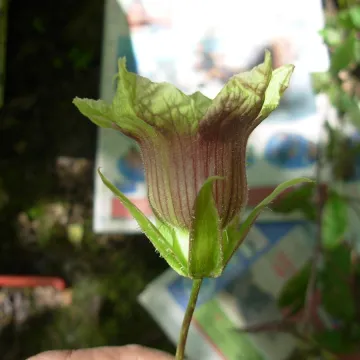

Yellow cup-and-saucer vine
Cobaea lutea
Description
Yellow cup-and-saucer vine (lat. Cobaea lutea) is a perennial climbing plant belonging to the Polemoniaceae family. Renowned for its unique bell-shaped flowers and rapid growth rate, it is widely valued in horticulture for its ability to cover vertical structures and create lush green barriers in garden settings.
The plant originates from the tropical and subtropical mountainous regions of Central and South America, particularly Mexico. Due to its tropical origins, it is typically treated as an annual in temperate climates, as it cannot survive frost. In greenhouse conditions or mild climates, it behaves as a perennial, thriving with sufficient heat and sunlight.
Botanically, the plant features vigorous stems capable of reaching several meters in height. The compound leaves terminate in tendrils, which allow the vine to anchor itself firmly to various supports. The blossoms, characterized by their yellow to greenish-yellow hue, have a distinct structure that provides significant ornamental value to any landscape design.
Successful cultivation requires a location with full sun and protection from strong, cold winds. The ideal soil should be fertile, well-drained, and neutral in pH. Agronomical practices involve consistent irrigation throughout the growing season and the application of balanced fertilizers to support the intensive biomass production and flowering process.
While generally robust, the plant can be affected by pests such as aphids and spider mites, particularly in low-humidity environments. Maintaining proper air circulation and avoiding overhead watering can mitigate the risk of fungal infections. Regular inspection of the foliage is recommended to ensure early detection and management of potential biotic stress factors.
Photo gallery