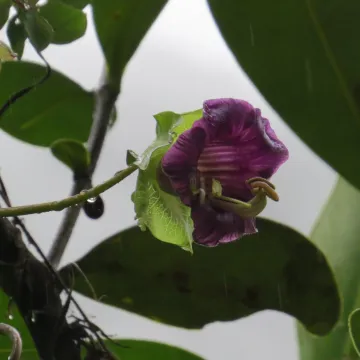

Cup-and-saucer vine
Cobaea scandens Cav.
Description
The Cup-and-saucer vine (Cobaea scandens Cav.) is a vigorous, climbing perennial herb belonging to the Polemoniaceae family, which is widely cultivated as an ornamental annual in temperate regions. Known for its rapid growth rate, it is highly valued by gardeners for its ability to cover large vertical surfaces with dense foliage and distinctive, large bell-shaped flowers that transition from pale green to deep violet as they mature.
Native to the tropical regions of Mexico and South America, this plant thrives in warm, humid environments. While it behaves as a perennial in its natural habitat, it is strictly treated as an annual in cooler climates because it lacks frost tolerance. Its cultivation range has expanded globally due to its aesthetic appeal and efficiency in providing privacy screens on fences, pergolas, and trellises.
Botanically, the plant is characterized by its complex pinnate leaves, which terminate in branched tendrils that allow the vine to climb heights of 3 to 4 meters rapidly. The flowers produce a unique musky scent, specifically adapted to attract nocturnal pollinators in its native ecosystem. The stem structure is robust, capable of supporting the weight of thick foliage throughout the growing season.
Successful cultivation requires a sunny, sheltered location with rich, well-draining soil. The plant is particularly sensitive to waterlogging, so soil preparation must include good drainage properties. As an intensive climber, it requires substantial nutritional support through regular fertilizer applications and a reliable, sturdy support system to facilitate its vertical growth and prevent stem breakage from heavy winds.
Common pests associated with this crop include aphids and spider mites, which can be particularly damaging in dry, indoor-grown seedling stages. Diseases like root rot are often the result of improper watering cycles. To maintain plant health, it is recommended to implement a preventative pest management strategy and ensure that the soil remains moist but not saturated. Proper spacing is also crucial to ensure airflow and reduce the incidence of fungal infections.
Photo gallery