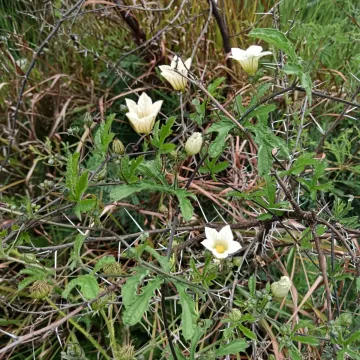

Coccinia adoensis
Coccinia adoensis
Description
Coccinia adoensis is a perennial herbaceous plant belonging to the Cucurbitaceae family. It is recognized for its significant root system, which develops tuberous structures capable of storing nutrients, allowing the plant to thrive in challenging environments subject to seasonal droughts.
The plant originates from tropical Africa, where it naturally occurs in savannas and woodland habitats. Its distribution area spans across various sub-Saharan countries, where it has historically been utilized by local communities. It is highly adapted to tropical climates that experience distinct fluctuations in rainfall throughout the year.
Botanically, the species is characterized by its climbing habit, requiring structural support for optimal growth. The leaves are typically palmate or lobed, and the plant produces attractive, often white, actinomorphic flowers. The fruits are berries that change color significantly upon ripening, serving as a primary means of seed dispersal in its native ecosystem.
Agricultural success depends on providing well-drained, nutrient-rich soils and ample exposure to sunlight. The plant prefers warm conditions and is sensitive to frost, which limits its outdoor cultivation to tropical or subtropical regions. Proper agricultural practices include providing trellises or supports to prevent the foliage from matting on the ground, which can lead to decay.
The primary use of this crop is nutritional, as its young shoots and leaves are often gathered and consumed as a leafy vegetable. Additionally, the tuberous roots play a vital role in local traditional ethnobotany. Farmers should remain vigilant against common pests such as aphids and fungal pathogens, which can occur during periods of high humidity and poor ventilation.
Photo gallery