
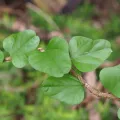
Cocculus trilobus
Cocculus trilobus
Description
Cocculus trilobus is a perennial woody vine belonging to the Menispermaceae family. Renowned for its rapid growth and dense foliage, this plant is a staple in many East Asian landscapes and is increasingly recognized for its significant role in traditional pharmacological practices.
The plant originates from East Asia, including Japan, China, and Korea. In its natural habitat, it thrives in woodland edges, mountain slopes, and thickets. It is well-adapted to temperate climates, showing a preference for locations that offer partial shade and protection from harsh, drying winds.
Botanically, the species is defined by its flexible, twining stems and characteristic three-lobed leaves. The plant produces small, inconspicuous flowers, which are later followed by dark, rounded drupes. Its root system is deep and fibrous, allowing it to anchor securely to supporting structures or embankments.
Cultivation requires fertile, well-draining soil with a slightly acidic to neutral pH. Success in growing Cocculus trilobus depends on providing adequate support, such as trellises or walls, and ensuring regular moisture during the first two years of development. Once established, the vine is relatively low-maintenance.
The plant is highly valued for its secondary metabolites, particularly alkaloids, which have been studied for their potential therapeutic effects. In agriculture and horticulture, it serves not only as an ornamental screen but also as a plant capable of stabilizing soil on steep terrains, preventing erosion in garden environments.
While the species is notably resilient, growers should monitor for potential pests such as aphids or spider mites, especially in dry and hot conditions. Effective management involves maintaining soil health and preventing waterlogging to avoid fungal pathogens like root rot, which are the most common health issues for this vine.
Photo gallery