Coco-plum
Chrysobalanus icaco L.
Description
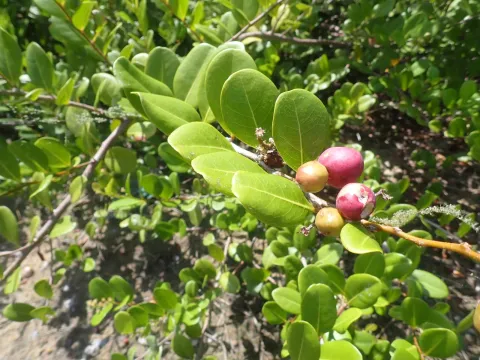
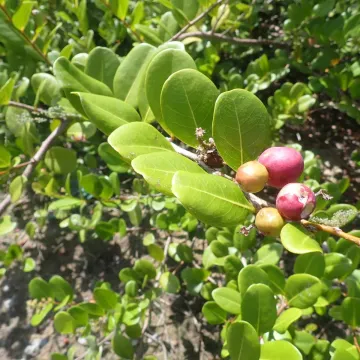
The coco-plum (Chrysobalanus icaco L.) is a versatile evergreen shrub or small tree belonging to the Chrysobalanaceae family. Known for its resilience in coastal environments, the plant features dense, glossy, oval-shaped leaves and produces edible drupe fruits that are highly valued in tropical regions.
Native to the tropical Americas and the Caribbean, the coco-plum thrives in sandy soils and is well-adapted to saline conditions, often growing naturally on coastal dunes. This species has spread across various tropical zones globally, where it is cultivated both for its culinary utility and as a functional landscape plant in erosion control.
Botanically, the coco-plum exhibits significant variability, with distinct varieties producing white, yellow, or deep purple fruits. The flowers are small and inconspicuous, occurring in clusters. The fruit contains a single large seed and a sweet, pulp-like flesh. The plant is considered an important food source for local wildlife and contributes significantly to coastal biodiversity.
Successful cultivation requires a frost-free climate with plenty of direct sunlight. While the plant is drought-tolerant once established, it performs best when provided with consistent moisture during the fruiting phase. It is not overly demanding regarding soil fertility, though it thrives in well-draining, sandy loam textures that mimic its natural habitat.
- Excellent tolerance for salt spray.
- Easy propagation via seeds or vegetative cuttings.
- Highly effective as a windbreak in coastal areas.
- Low maintenance requirements once fully established.
Economically, the fruit is widely used in artisanal food production, specifically for jams, jellies, and desserts due to its high pectin content. The seeds are also edible and rich in oils. Commercially, the coco-plum is also popular in ornamental horticulture. Growers should remain vigilant for common pests such as aphids and scale insects, as well as fungal issues that may arise in overly humid, stagnant air conditions.
Photo gallery