Coelastrum microporum
Coelastrum microporum
Description
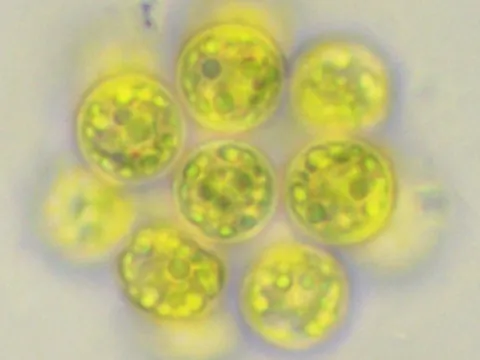
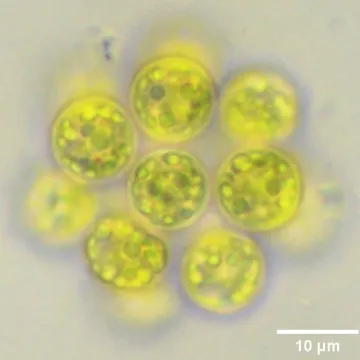
Coelastrum microporum is a prominent species of green microalgae belonging to the Scenedesmaceae family. It is widely recognized for its distinctive spherical colonies, known as coenobia, which are formed by interconnected cells held together by a rigid mucilaginous framework, allowing for efficient survival in diverse aquatic environments.
The species has a global distribution and is commonly found in freshwater lakes, ponds, and reservoirs. Its ability to adapt to varying light intensities and nutrient concentrations has established it as a stable component of global phytoplankton, often thriving in eutrophic water bodies where nutrient levels are naturally high.
In terms of agricultural management, cultivating Coelastrum microporum requires a precise balance of mineral nutrients, primarily nitrogen and phosphorus, within an aqueous medium. High-yield production is typically achieved in photobioreactors where pH levels are strictly monitored and temperature is maintained between 20°C and 30°C.
The economic value of this microalga lies in its role in modern biotechnology. It serves as a biological agent for the tertiary treatment of municipal and agricultural wastewater, effectively removing excess nutrients while simultaneously producing biomass that can be harvested for lipid and protein extraction.
While Coelastrum microporum is generally robust, it is susceptible to infections by specialized algae-attacking viruses and competition from faster-growing filamentous algae or rotifers in open systems. Preventing contamination requires closed-system cultivation methods and the use of sterile inoculation techniques to maintain culture purity.
- Excellent candidate for wastewater phytoremediation.
- High potential for biodiesel and lipid production.
- Adaptable to a wide range of temperate climates.
Photo gallery