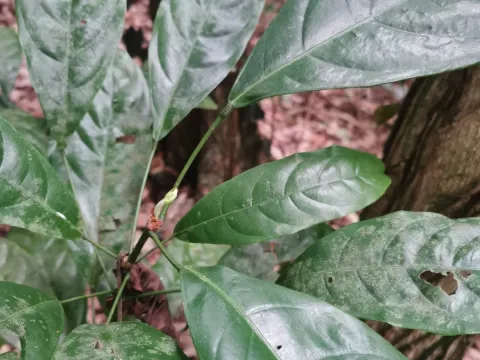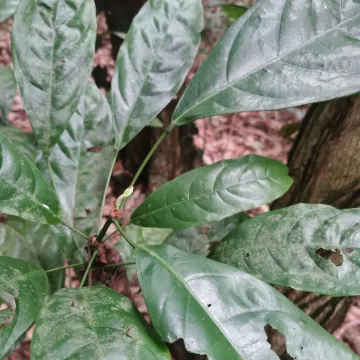
Kola nut tree
Cola nitida (Vent.) Schott & Endl.
Description
The Kola nut tree (Cola nitida) is a prominent evergreen plant belonging to the Malvaceae family, specifically the Sterculioideae subfamily. Widely recognized for its economic and cultural significance, this tree is a staple crop in tropical agriculture. It can grow up to 20 meters tall, providing essential shade and high-value produce in its native habitats.
Originating from the tropical rainforests of West Africa, the Kola nut tree is now cultivated in various tropical regions across the globe, including parts of South America and the Caribbean. It thrives in high-humidity environments where temperatures remain stable year-round. These conditions are vital for the proper development of its fruit and high concentration of bioactive compounds.
Botanically, the tree is characterized by its large, leathery leaves and star-shaped flowers that develop into complex follicles. These fruits contain the seeds known as kola nuts, which are harvested for their high caffeine and theobromine content. The tree is a long-lived perennial, reaching its peak reproductive potential after about a decade of growth in suitable soil and climatic conditions.
Cultivation requires deep, well-drained loamy soils rich in organic matter. Agricultural management focuses on maintaining soil moisture and protecting young saplings from direct, harsh sun and strong winds. Regular pruning is necessary to manage canopy density and facilitate efficient fruit harvesting. Fertilization strategies often focus on nitrogen-potassium balances to encourage healthy vegetative growth and fruit yield.
The industrial and agricultural utility of Cola nitida is diverse, primarily focusing on the beverage industry and pharmaceutical manufacturing. Beyond its commercial use as a stimulant ingredient, the plant plays a crucial role in local economies. Proper post-harvest handling is critical, involving the drying and curing of nuts to prevent degradation and mold growth during storage or export.
- Susceptibility to fungal pathogens such as fruit rot.
- Infestation by kola nut weevils that reduce market value.
- Sensitivity to waterlogging and poor soil drainage.
Photo gallery