Lusitanian colchicum
Colchicum lusitanum
Description
Lusitanian colchicum (Colchicum lusitanum) is a perennial bulbous plant belonging to the Colchicaceae family. It is a distinctive botanical species known for its reversed growth cycle, where lush foliage emerges in the spring, while its delicate, funnel-shaped flowers appear exclusively in the autumn season.
The origin of this species is primarily centered in the southwestern part of Europe, specifically in Portugal and Spain. Its natural range consists of meadows, scrublands, and rocky hillsides where the Mediterranean climate provides the necessary balance of warm, dry summers and mild, wet springs required for the plant to thrive.
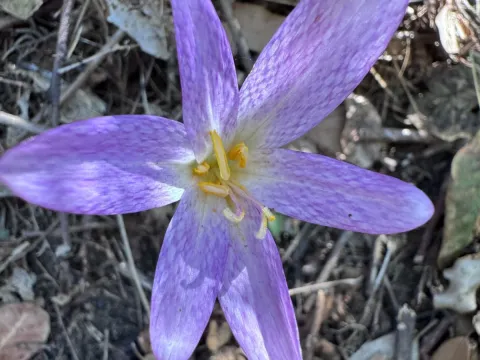
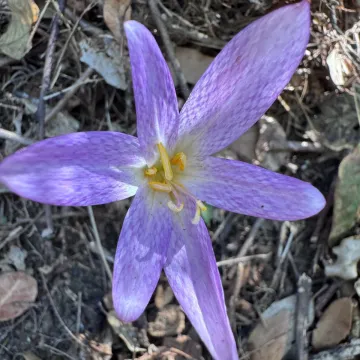
Botanically, the plant is structured around a large corm that stores nutrients to fuel its growth. The leaves are broad and lanceolate, forming a rosette that dies back completely by mid-summer. The flowers exhibit vibrant purple to pinkish hues, frequently decorated with a distinctive checkerboard pattern, which enhances their aesthetic value during the cooling autumn months.
Agronomic requirements for successful cultivation focus on soil structure and moisture control. The plant requires well-draining, nutrient-rich soil with a neutral to slightly alkaline pH. Excess moisture in the soil during the summer dormancy period is the most common cause of corm rot, therefore placing the plant in a slightly elevated or sloped position is recommended to ensure proper drainage.
In terms of usage, Colchicum lusitanum is primarily valued as an ornamental garden plant, providing late-season color when other species have faded. Medicinally, the plant is highly significant as it serves as a source for colchicine, a complex alkaloid extracted for various pharmaceutical applications, including the treatment of inflammatory diseases and genetic research.
- Requires a sunny position for optimal flower development.
- Propagation is best achieved through division of corm offsets.
- Slugs and snails are the primary pests that target spring foliage.
- The plant is toxic and should be handled with gardening gloves.
Photo gallery