
Coldenia procumbens
Coldenia procumbens L.
Description
Coldenia procumbens L. is a prostrate herbaceous plant belonging to the Boraginaceae family. It is widely recognized in tropical agriculture, primarily appearing as a weed in moist environments, although it holds significant historical value in traditional herbal practices within its native regions.
The plant is indigenous to tropical regions, particularly India, Southeast Asia, and parts of Africa. It thrives in humid conditions and is commonly found in rice paddies, along riverbanks, and in disturbed agricultural lands. Its ability to create dense vegetative mats allows it to thrive in varied tropical soil types, from sandy loams to heavier clays.
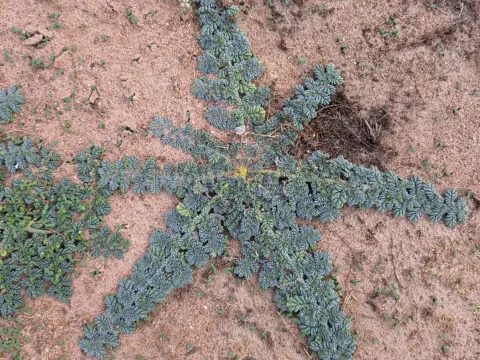
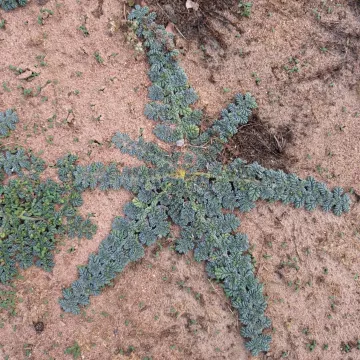
Botanically, Coldenia procumbens is defined by its prostrate stems that radiate from a central taproot. The leaves are small, obovate, and distinctively crisp or crisped-plicate, covered in fine hairs. The flowers are solitary, small, and white, emerging from the leaf axils, which enables the plant to produce seeds continuously throughout the favorable growing season.
Regarding agricultural management, the plant requires high temperatures and consistent moisture to flourish. It lacks cold tolerance, meaning its range is strictly confined to frost-free zones. Controlling it in a commercial field often requires timely mechanical removal, as its rapid ground-covering habit can shade out emerging crop seedlings and compete for nitrogen and phosphorus.
The economic use of this plant is largely localized, focusing on its medicinal properties as an anti-inflammatory and antiseptic agent. From an agronomic pest perspective, the plant can harbor various soil-borne pathogens. Major issues for the species include:
- susceptibility to root-rot fungi in waterlogged soils;
- infestations by sap-sucking insects during dry spells;
- competitive dominance in humid, high-rainfall environments.
Photo gallery