Colletia armata
Colletia armata
Description
Colletia armata, commonly known as the anchor thorn, is a fascinating shrub belonging to the Rhamnaceae family. It is distinct for its highly specialized anatomy, where leaves are reduced to mere scales and the stem system has evolved into rigid, sharp, green spines capable of photosynthesis, allowing the plant to thrive in harsh, resource-limited environments.
Originating from the temperate regions of South America, specifically Chile and Argentina, this plant has adapted to open, rocky habitats. Due to its unique structure, it has gained popularity in horticultural circles as a specimen plant, appreciated for its architectural form and its late-season flowering period that brings fragrance to the garden when little else is in bloom.
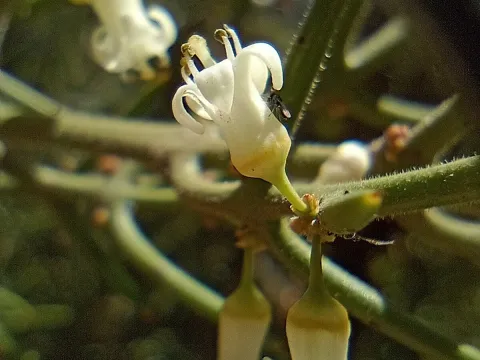
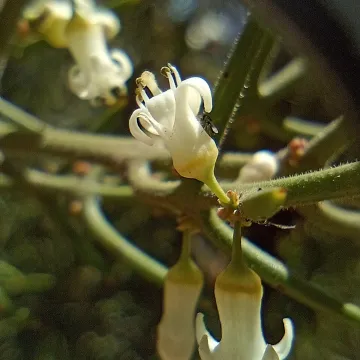
Botanically, Colletia armata is an evergreen shrub that exhibits slow growth rates. The flowers are small, bell-shaped, and usually white to pale pink, emerging directly from the axils of the thorns. This adaptation allows the plant to reduce water loss significantly, making it a stellar example of xerophytic survival strategies in temperate zones.
Regarding agrotechnical requirements, successful cultivation depends on providing high light intensity and sharply drained soils. The plant is not fussy about nutrient content but is highly intolerant of waterlogged conditions, which lead to rapid root decay. In colder climates, it is essential to provide winter protection or cultivate the plant in containers that can be moved to a frost-free area.
In terms of agricultural and horticultural use, it is primarily grown for its visual appeal in dry gardens, rockeries, or as an impenetrable, defensive hedge. While it is generally robust, growers should monitor for common pests like spider mites in dry air environments. Avoiding overwatering is the primary strategy to prevent soil-borne pathogens and root rot, ensuring the longevity of the specimen.
Photo gallery