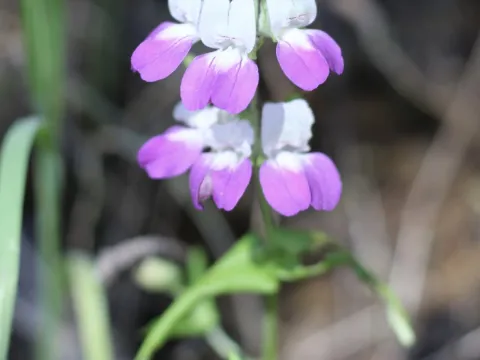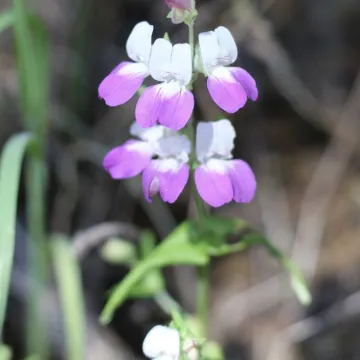
Collinsia heterophylla
Collinsia heterophylla G. Buist ex Graham
Description
Collinsia heterophylla, commonly known as Chinese houses, is an attractive annual herb belonging to the Plantaginaceae family. This species is highly regarded for its unique, whorled inflorescences that produce a tiered, pagoda-like appearance. Its distinct floral structure makes it a staple in wildflower gardens and naturalistic landscape designs where color and unique texture are prioritized during the spring and early summer seasons.
Native to California and parts of Oregon, the plant has evolved to thrive in cool, shady forest areas and moist slopes. Its origin dictates its current cultivation requirements, as it prefers climates that mirror the Mediterranean conditions of its native range. Today, it is widely grown globally as an ornamental plant, cherished by gardeners for its ability to bring a touch of the wild, untamed beauty of Western North America to domestic landscapes.
Botanically, the plant features erect stems typically reaching 20 to 50 cm in height. The foliage exhibits heterophylly — a phenomenon where leaves on the same plant vary in shape depending on their position along the stem, with lower leaves being broader and ovate, and upper leaves becoming more linear and lanceolate. The flowers themselves are typically bicolored, displaying shades of violet and white, which attract various pollinators, including bees and butterflies.
Regarding agrotechnical needs, Collinsia heterophylla requires well-drained, moderately fertile soil with a neutral to slightly acidic pH. It performs best in partial shade, as exposure to harsh, direct sunlight can lead to rapid wilting and shortened flowering duration. Consistent soil moisture is crucial, especially during the establishment phase, though the soil should never remain waterlogged, as this significantly increases the risk of root pathogens.
Common horticultural challenges include managing fungal diseases such as powdery mildew, which can occur if airflow is insufficient. Pests such as aphids may occasionally congregate on the tender flower stalks. To maintain healthy stands, gardeners should ensure adequate spacing during sowing and keep the area free of invasive weeds. Given its natural growth cycle, the plant can effectively reseed itself, provided that the site conditions are maintained year-round.
- Thrives in partial shade and cool, moist conditions.
- Excellent choice for borders and native plant gardens.
- Can be sown in autumn for early spring blooms.
- Provides high nectar value for local pollinator species.
Photo gallery