Cilician bladder senna
Colutea cilicica
Description
The Cilician bladder senna (lat. Colutea cilicica) is a deciduous shrub belonging to the Fabaceae family. This hardy plant is highly valued for its ornamental characteristics and its ability to enrich the soil with nitrogen, acting as a nitrogen-fixing species in various landscape settings.
Originating from Southeastern Europe and Asia Minor, this species is well-adapted to the climatic conditions of the Mediterranean and Caucasian regions. It naturally thrives in rocky, arid, and sun-drenched environments, which makes it an excellent candidate for xeriscaping and reclamation projects.
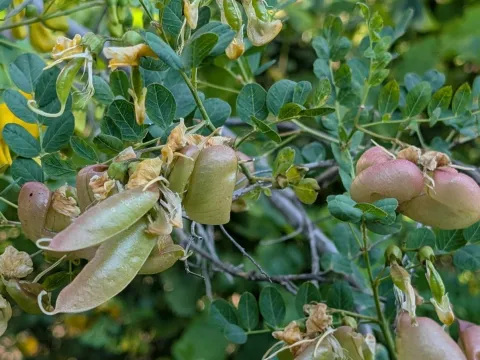
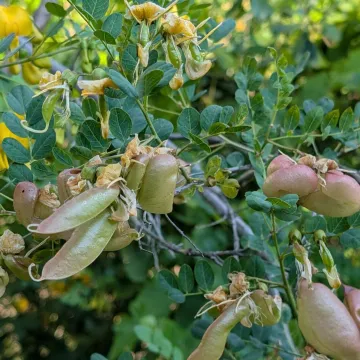
Botanically, it reaches a height of 3 to 4 meters, featuring pinnate leaves and vibrant yellow flowers arranged in racemes. Its most distinctive trait is the inflated, papery fruit pods that appear later in the season. These pods are light in weight and can persist on the branches, adding structural interest to the garden.
Cultivation requirements focus primarily on selecting a site with full sunlight and well-drained, alkaline soil. The plant is exceptionally drought-tolerant once established and does not require frequent irrigation. Regular maintenance involves light pruning in late winter or early spring to remove dead wood and encourage vigorous new growth.
This shrub is primarily used in landscape design for hedge formation, slope stabilization, and as an attractant for pollinators. Regarding protection, it is susceptible to aphids and spider mites, while excessive moisture can lead to root rot. Maintaining good airflow around the canopy is essential for disease prevention.
Photo gallery