Bladder senna
Colutea media
Description
Bladder Senna (Colutea media) is a perennial deciduous shrub belonging to the Fabaceae family. As a hybrid species derived from Colutea arborescens and Colutea orientalis, it exhibits robust growth patterns and is highly valued in both commercial landscaping and specialized horticulture for its resilience.
Originating from regions across Southern Europe and Western Asia, this plant has adapted to survive in diverse environmental conditions. It is particularly noted for its ability to thrive in poor, rocky, or calcareous soils where other ornamental species might struggle, making it an excellent candidate for ecological restoration.
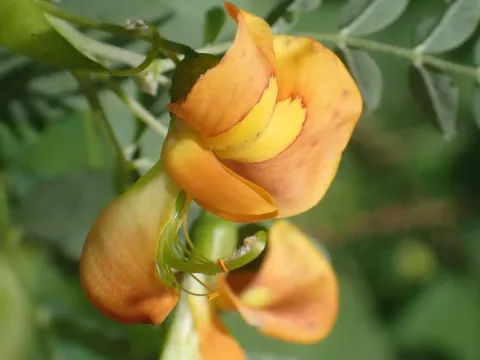
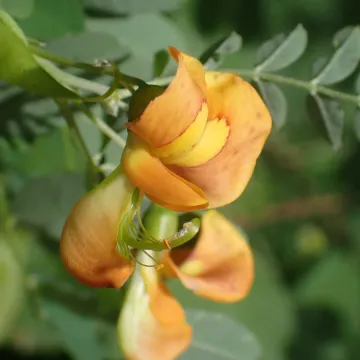
Botanically, the plant is characterized by its pinnate foliage and striking yellow-orange papilionaceous flowers. Its most distinct feature is the presence of bladder-like, inflated seed pods that appear after flowering. These structures are not only visually interesting but also serve as a mechanism for seed dispersal in windy environments.
For successful cultivation, the plant requires well-drained soil and a sunny location to maximize flower production. It is highly drought-tolerant once established, requiring minimal maintenance. Pruning should be carried out in late winter or early spring to remove dead wood and encourage dense, healthy growth during the summer season.
Beyond its ornamental appeal, the species serves several utilitarian purposes. It is frequently employed in erosion control on steep banks and slopes due to its extensive root system. Furthermore, it is recognized as a beneficial plant for biodiversity, providing nectar for pollinators and serving as a low-maintenance, nitrogen-fixing shrub that can improve soil structure over time.
Photo gallery