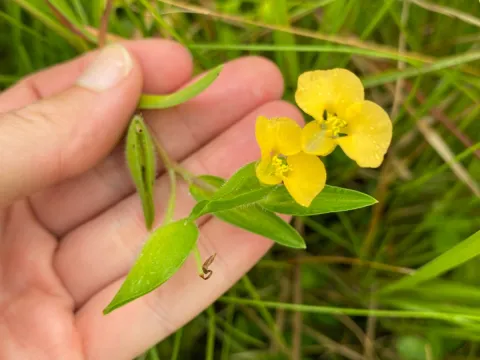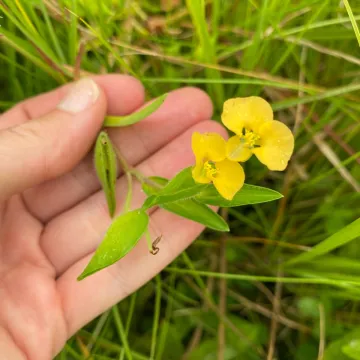

African dayflower
Commelina africana
Description
African dayflower (Commelina africana) is a perennial herbaceous plant belonging to the Commelinaceae family. Unlike many other species in this genus known for their blue flowers, this particular variety is recognized for its vibrant yellow blossoms, making it a unique choice for landscaping and specialized agricultural applications in warm climates.
Native to Africa, the plant is naturally distributed across various tropical and subtropical regions. Its range of cultivation includes areas where warm temperatures prevail throughout the growing season. While primarily grown for its ornamental value, it is also studied for its resilience in diverse ecological niches, adapting well to varying sunlight conditions.
Botanically, the African dayflower features succulent-like stems that can trail along the ground and produce roots at the nodes. Its leaves are lanceolate, arranged alternately, and provide a lush green backdrop for the distinct yellow flowers. The plant exhibits rapid growth, which is a key trait that facilitates its use in ground cover applications.
Regarding cultivation requirements, the plant thrives in well-drained, nutrient-rich soils with a neutral pH. It prefers semi-shaded environments but can tolerate full sun if provided with adequate moisture. Agronomic management involves maintaining consistent soil moisture levels while ensuring proper drainage to prevent root rot, which is a primary concern in waterlogged areas.
The economic and practical utility of Commelina africana lies in its erosion control properties and potential for use as a cover crop. It effectively protects topsoil in warm, moist climates and competes well with weeds. In addition to these roles, it is widely appreciated in garden design for its long flowering period and minimal maintenance once established.
- Consistent irrigation during periods of low rainfall.
- Application of organic mulch to improve soil structure.
- Monitoring for common pests like aphids and spider mites.
- Regular pruning to promote bushier growth habits.
- Winter protection in temperate zones where frost is possible.
Photo gallery