Firethorn corkwood
Commiphora pyracanthoides
Description
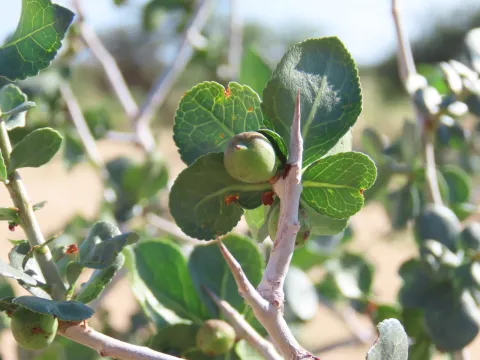
Firethorn corkwood (Latin: Commiphora pyracanthoides) is a prominent woody species belonging to the Burseraceae family. It is a highly resilient shrub or small tree, renowned for its ability to thrive in the harsh, arid environments of the African savannah, playing a vital role in local biodiversity.
The plant originates from the southern and eastern regions of Africa, including countries like Namibia, Zimbabwe, and South Africa. It is characteristically found in rocky outcrops and dry woodlands, where it has evolved to withstand long droughts and high thermal exposure. Its natural distribution is strictly linked to regions with specific semi-arid climatic cycles.
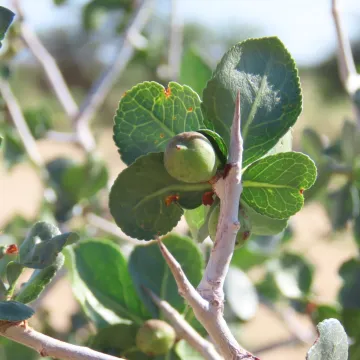
Botanically, it features a unique structure with a tendency to produce sharp, modified lateral shoots that serve as thorns. The bark is notably papery, peeling off in thin, translucent strips. Its leaves are usually trifoliate and fragrant, releasing a subtle resinous scent when crushed. This aromatic quality is a key indicator of its botanical classification within the Commiphora genus.
Successful cultivation of this species requires well-aerated, sandy, or rocky soil with excellent drainage properties. In terms of agronomy, it is critical to avoid waterlogging, as the root system is highly susceptible to rot in stagnant moisture. The plant demands full sun exposure and is intolerant of frost, requiring a stable, warm environment throughout the year to maintain optimal physiological activity.
Economically, the plant is primarily harvested for its fragrant resin, which is used in traditional medicine and the fragrance industry. Beyond its commercial value, it is valued in arid-land landscaping for creating impenetrable living fences due to its dense, thorny nature. The main pests that threaten its growth include scale insects and spider mites, which typically occur when air circulation is poor.
- Superior drought tolerance
- Aromatic resin production
- Natural pest resistance in dry climates
- Use in sustainable dry-land landscaping
- Hardy woody structure for living barriers
Photo gallery