Common everlasting
Chrysocephalum apiculatum (Labill.) Steetz
Description
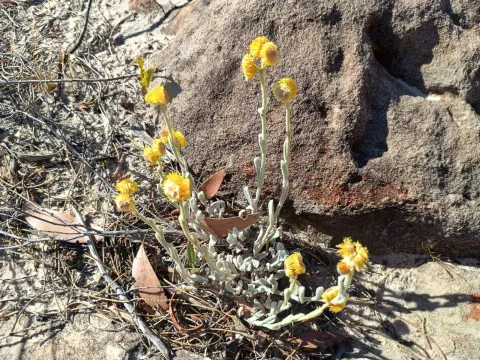
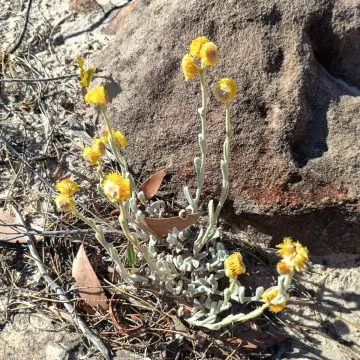
Common everlasting (Chrysocephalum apiculatum) is a perennial herb belonging to the Asteraceae family. This species is widely recognized for its high ornamental value, characterized by striking silver foliage and vibrant golden-yellow flower heads that offer a long-lasting bloom period.
Native to Australia, this plant has adapted to various habitats, including woodlands and grasslands. Its natural range demonstrates its remarkable resilience to diverse environmental conditions, making it an excellent candidate for regions with Mediterranean or semi-arid climates where water conservation is a priority.
Botanically, it is a low-growing subshrub featuring branching stems covered in fine, woolly hairs. This pubescence is an adaptive trait that reflects sunlight and reduces transpiration, allowing the plant to thrive in dry settings. The flower heads are small, button-like clusters that provide a distinct architectural interest in a garden setting.
The agrotechnical requirements for this species are specific: it demands well-draining soil and full sun exposure. It is highly intolerant of waterlogged conditions, which often cause root rot. Gardeners should prioritize planting in sandy or gravelly soil mixes, and supplemental irrigation should be minimal, occurring only during extended periods of drought.
In terms of agricultural and horticultural utility, it serves as a versatile groundcover and a decorative element in xeriscaping. It is relatively resistant to common pests, though aphids or fungal pathogens may appear if the drainage is poor or air circulation is insufficient. Proper spacing during planting is essential to maintain plant health and vigor.
Photo gallery