
Description
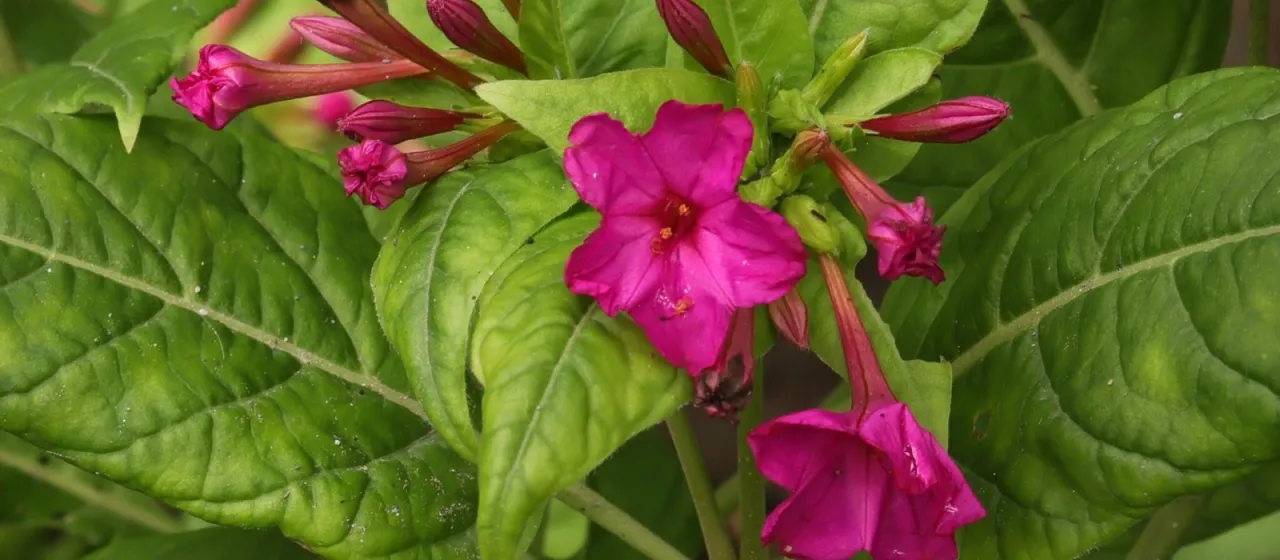
Mirabilis jalapa (L.), known colloquially as the four o'clock flower, is a perennial herbaceous plant belonging to the Nyctaginaceae family. While native to tropical climates, it is widely grown as an annual ornamental crop in temperate regions. Its most notable characteristic is the tendency for its blooms to open late in the afternoon or evening, releasing a sweet fragrance.
Originating from the tropical regions of the Americas, specifically Mexico, this plant has been introduced to many parts of the globe. Its ability to thrive in various environments has allowed it to become a staple in gardening and landscape design, where it is valued for its hardiness and reliable flowering performance during the peak summer months.
Botanically, the plant features a bushy, erect habit, typically growing between 50 and 100 cm in height. It develops a thick, tuberous taproot that functions as a storage organ. The leaves are ovate and pointed, and the trumpet-shaped flowers display a wide range of colors—often on the same plant—including yellow, pink, white, and deep red, sometimes appearing in variegated patterns.
Successful cultivation requires full sun exposure and fertile, well-draining soil with a neutral to slightly alkaline pH. Agronomic practices involve regular watering to prevent extreme drought stress and the application of balanced fertilizers to support vigorous development. While it is hardy in frost-free climates, in cooler regions, the tubers should be lifted and stored if overwintering is desired.
The primary agricultural and economic utility of Mirabilis jalapa lies in ornamental landscaping. It serves as an effective border plant, a filler for garden beds, and a low-maintenance hedge. Additionally, the plant contains pigments that have been historically investigated for their use in food coloring and cosmetics, although it is also known for the toxic properties of its seeds and roots.
- Excellent heat tolerance
- Rapid growth cycle
- High aesthetic value in garden design
- Potential for naturalized propagation
The plant is generally resilient to pests and diseases; however, it can be susceptible to fungal issues such as root rot or leaf spots if drainage is poor. Occasionally, aphids or spider mites may infest the foliage during periods of heat stress, necessitating standard horticultural practices for control to ensure the longevity of the plantings throughout the season.