Rough horsetail
Equisetum hyemale L.
Description
Rough horsetail (Equisetum hyemale L.), also known as scouring rush, is a perennial vascular plant belonging to the Equisetaceae family. Unlike other horsetail species, this plant is evergreen, maintaining its striking, rigid green stems throughout the winter months. It is characterized by a strong, creeping rhizome system that allows it to thrive in dense colonies.
The native range of this species encompasses the temperate zones of the Northern Hemisphere, including large parts of North America, Europe, and Asia. It is typically found in moist environments, such as riverbanks, wetlands, and sandy shores, where ground moisture is consistently high. It is remarkably versatile regarding soil types, tolerating both sandy and loamy conditions as long as moisture levels remain sufficient.
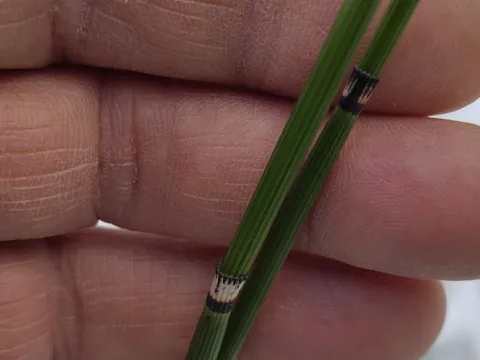
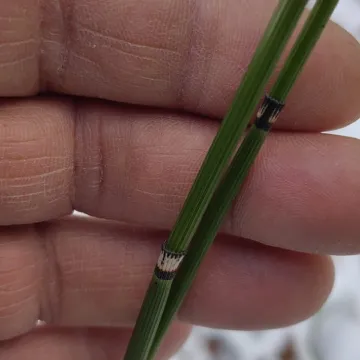
Botanically, the plant features unbranched, hollow, and jointed stems that reach up to 1 meter in height. The stems have high concentrations of silica in their epidermis, which gives them a rough, sandpaper-like texture. This unique composition is a defense mechanism against herbivores and a hallmark of the species' physical structure, while the leaves are reduced to small sheaths at the nodes.
Cultivation requirements for rough horsetail are relatively simple, primarily focusing on maintaining adequate moisture. It is a hardy, low-maintenance plant that can be grown in full sun to partial shade. Due to its aggressive rhizomatous growth, it is often recommended to use root barriers when planting in gardens to prevent it from becoming invasive. It is highly resistant to most pests and diseases common in other agricultural crops.
In terms of practical utility, the plant is widely used in landscape design to provide architectural structure and a modern aesthetic, particularly near water features. Historically and currently, it is valued for its abrasive properties, often used for scouring pots or polishing wood. Medically, it has been used in traditional practices for its diuretic properties, though it should be handled with care due to its potential toxicity to livestock.
- Evergreen appearance throughout the year
- High silica content for industrial polishing
- Excellent for water-feature landscaping
- Hardy and low-maintenance cultivation
Photo gallery