
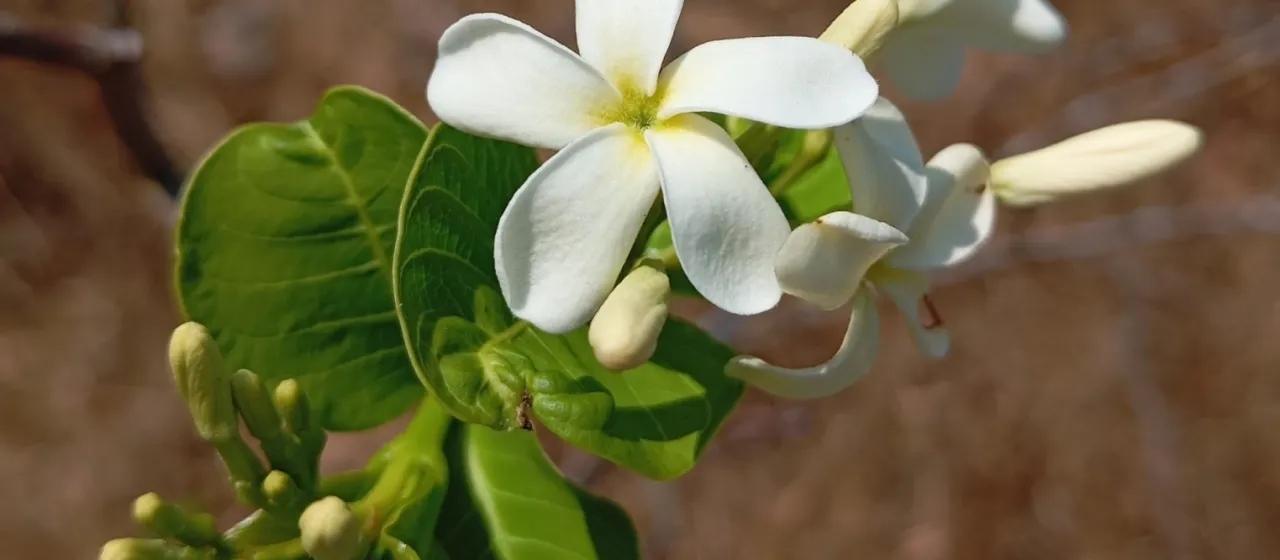
Description
Holarrhena pubescens, commonly known as Kurchi, is a significant species within the Apocynaceae family. It is a deciduous shrub or small tree widely recognized for its diverse medicinal properties, particularly in traditional systems of medicine throughout its native tropical ranges.
The native habitat of this species spans across the tropical regions of India, Myanmar, and parts of Africa. It thrives in diverse forest types, ranging from moist deciduous forests to dry rocky terrains, showing remarkable adaptability to different altitudes and soil moisture levels within the tropical climate zone.
Botanically, the plant is characterized by its opposite, ovate-to-elliptic leaves and terminal cymes of fragrant, white, or creamy-yellow flowers. The fruits are distinctive, long, slender, cylindrical follicles that grow in pairs. The bark of the plant is typically smooth or slightly scaly, serving as the primary source of bioactive alkaloids.
For successful cultivation, the crop requires well-drained soil and exposure to full sunlight. It is sensitive to waterlogging and prefers loam or sandy soil structures. Propagation is usually achieved through seeds or stem cuttings. In commercial settings, maintenance involves managing growth through periodic pruning to ensure optimal bark development and canopy density.
The economic and agricultural utility of this species includes:
- Extraction of alkaloids from the bark for pharmacological preparations targeting digestive health.
- Utilization of its medium-soft, white wood for carving and various household utility items.
- Landscape management where it is grown for its aesthetic value as a flowering ornamental shrub.
Regarding health management, the plant is occasionally susceptible to leaf spot pathogens and mite infestations. Effective agronomic control involves maintaining appropriate inter-plant spacing to facilitate air circulation and avoiding excessive nitrogen fertilization that may weaken the plant's natural resistance to pests.