Poison hemlock
Conium maculatum L.
Description
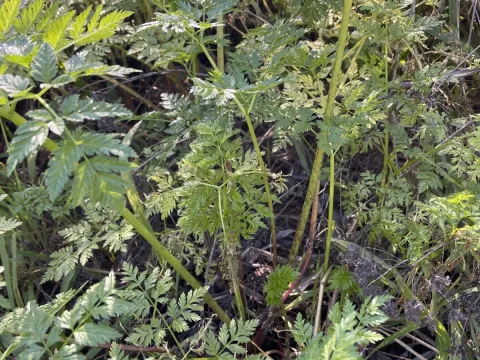
Poison hemlock (Conium maculatum L.) is a highly toxic biennial herbaceous plant belonging to the Apiaceae family. During its first year, it grows as a low-lying basal rosette of leaves, while in the second year, it produces a stout, hollow, branched stem that can reach heights of up to 2.5 meters. The stems are distinctively marked with purple blotches, which is a key identification feature for this species.
Native to Europe, North Africa, and Western Asia, poison hemlock has become an invasive species in North and South America, as well as Australia. It typically thrives in disturbed areas such as roadsides, field margins, ditch banks, and fallow agricultural land. The plant is highly adaptable to various soil types, preferring moisture-rich sites, which makes it a frequent competitor in meadows and pastures.
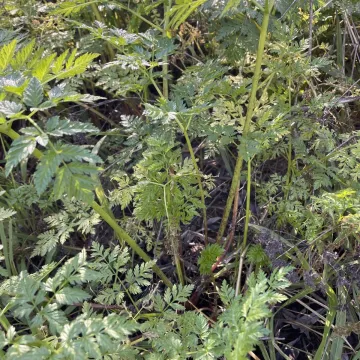
Botanically, it features pinnately compound leaves that look similar to parsley or wild carrot. Its tiny white flowers are arranged in umbrella-shaped clusters known as umbels. When crushed, the plant emits a foul, musty odor similar to mouse urine. These visual and sensory characteristics help differentiate it from other non-toxic plants within the same botanical family.
From an agricultural standpoint, poison hemlock is a dangerous weed because it poses a significant threat to livestock. If consumed by cattle, horses, or sheep, it can cause severe respiratory failure and death. Effective management requires a combination of mechanical removal, such as digging out the taproot, and the application of systemic herbicides. Because it produces thousands of seeds per plant, prevention of seed dispersal is critical.
While extremely poisonous, poison hemlock has historical and limited modern applications in pharmacology. It contains several alkaloids, including coniine, which have been used in controlled laboratory settings for sedative and analgesic research. Due to the high mortality rate associated with accidental ingestion, it is categorized as a high-risk weed that requires strict management in any agricultural or residential setting.
- Family: Apiaceae
- Lifespan: Biennial
- Key Feature: Purple spots on stems
- Habitat: Ruderal, wet soils
- Toxicity: Lethal due to coniine alkaloids
Photo gallery