Cottonhead
Conostylis aculeata
Description
Cottonhead (Conostylis aculeata) is a distinctive perennial herb belonging to the Haemodoraceae family. Known for its grass-like appearance and sturdy structure, this plant is native to the diverse landscapes of Western Australia, where it has evolved to thrive in nutrient-poor and sandy soils.
The plant originates from the southern regions of Western Australia, occupying habitats ranging from heathlands to open woodlands. Its evolutionary path has made it an exceptional candidate for xeriscaping in various parts of the world, particularly in regions that mirror the Mediterranean climate with dry, hot summers and mild, wet winters.
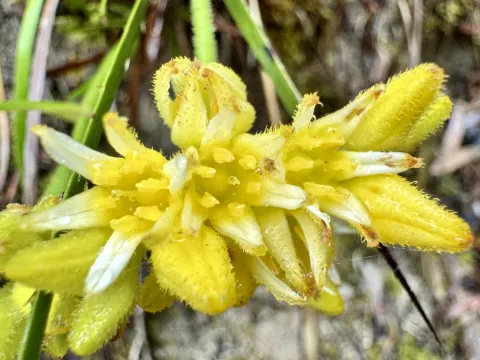
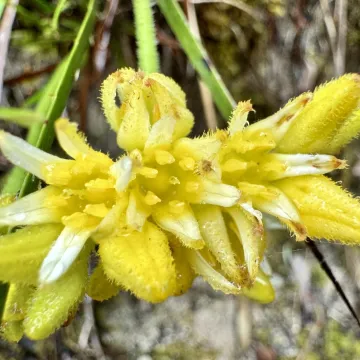
Botanically, it features narrow, pointed leaves arranged in dense, clumping rosettes. The inflorescences consist of small, often woolly or hairy flowers that give the plant its common name. These flowers typically bloom in yellow, cream, or gold shades, held above the foliage on short, sturdy stems, attracting local pollinators during the spring and summer seasons.
Cultivation requirements are centered around excellent drainage and ample sunlight. As a member of the Australian flora, it is highly sensitive to root rot if grown in heavy, water-logged soils. Gardeners should provide a sandy, well-draining substrate and avoid excessive fertilizing, as the plant is adapted to nutrient-deficient environments. It is remarkably drought-tolerant once established.
In terms of usage, it serves as a robust ornamental plant, perfect for rock gardens, borders, and pots. Regarding plant health, it is generally resilient, though growers should watch for common pests such as aphids or mealybugs in greenhouse conditions. Proper spacing is essential to ensure adequate airflow, preventing fungal issues related to humidity around the base of the plant.
Photo gallery