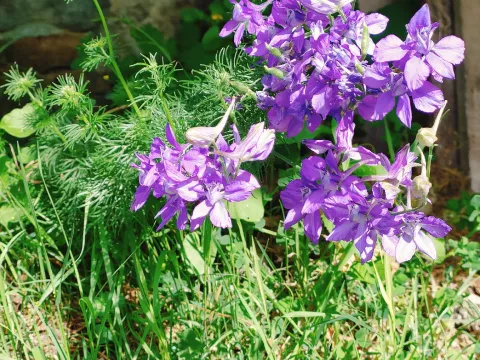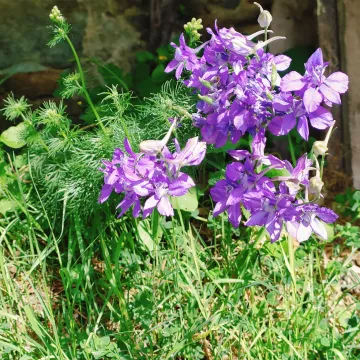
Consolida ajacis
Consolida ajacis (L.) Schur
Description
Consolida ajacis, commonly referred to as rocket larkspur or Consolida, is an annual herbaceous plant belonging to the Ranunculaceae family. It is a prized ornamental species, frequently confused with perennial Delphiniums, but distinct in its shorter life cycle and specific morphological traits, such as its complex inflorescence structure.
The plant originates from the Mediterranean basin but has been naturalized globally in temperate climate zones. Its adaptation to various environments allows it to thrive in diverse soil conditions, provided that basic agronomic requirements are met. It is an excellent choice for gardeners looking for vertical interest in beds and borders, often used in cottage garden designs.
Botanically, it features highly divided, feathery foliage and tall, spike-like racemes of flowers in shades of violet, blue, pink, or white. The plant develops a deep taproot, which makes it intolerant of transplanting; therefore, direct sowing into the final location is the recommended agricultural practice for this species.
Regarding climate and soil, Consolida ajacis requires full sun exposure to ensure robust growth and flower development. It prefers well-drained, fertile, neutral to slightly alkaline soils. The key to successful cultivation is moisture management; while it needs regular watering during the establishment phase, it demands excellent drainage to avoid crown rot, especially in humid conditions.
- Requires thinning of seedlings to ensure proper air circulation.
- Thrives in cool-to-moderate spring and summer temperatures.
- Susceptible to powdery mildew in poor ventilation conditions.
- Often attracts beneficial pollinators such as bees and butterflies.
In terms of plant protection, the most common threats include fungal diseases like powdery mildew and crown rot, which are often consequences of high humidity and poor site selection. Pests such as aphids and leaf miners can affect the foliage; however, regular monitoring and standard horticultural practices usually keep these populations under control without extensive chemical intervention.
Photo gallery