Eastern larkspur
Consolida orientalis
Description
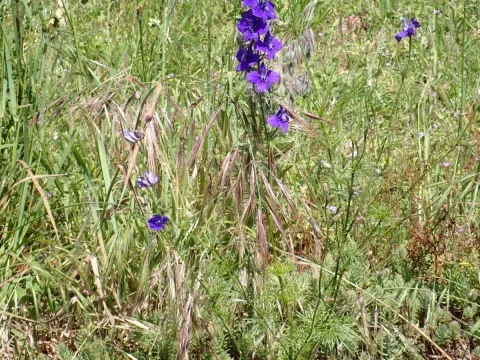
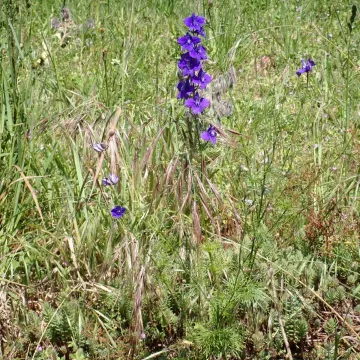
Eastern larkspur (lat. Consolida orientalis) is an annual herbaceous plant belonging to the Ranunculaceae family. In agricultural contexts, it is often categorized as a common weed in cereal fields, though it also holds interest for its distinct morphological features and its role in meadow ecosystems.
The species originates from the Mediterranean region, the Caucasus, and Western Asia. Its cultivation range has expanded significantly over time, and it is now naturalized across many parts of Europe. It thrives in open, disturbed landscapes and agricultural lands, preferring habitats with high solar radiation and moderate soil moisture.
The botany of the plant is characterized by a branching stem, typically reaching 50 to 70 cm in height. Its leaves are palmately divided, creating a fern-like appearance. The flowers are zygomorphic and possess a prominent spur, which is a key identifying feature, usually appearing in shades of blue, violet, or pink during the blooming season.
In terms of agricultural requirements, this plant is remarkably hardy and resilient to drought. It prefers well-drained, fertile soils with a neutral pH. Effective management of the plant in crop production requires systematic weed control, including post-emergence herbicide applications and mechanical weeding during the early stages of crop development to prevent competitive pressure on cereal yields.
The economic and practical use of this plant is multifaceted, despite its toxicity. Its primary applications include:
- Usage in ornamental gardening for wildflower meadows.
- Functioning as a nectar source for pollinators.
- Potential research in pharmacy for its alkaloid content.
Typical plant health issues involve fungal infections like powdery mildew, particularly in dense stands with poor airflow. Common pests include aphids and various beetle species that feed on the foliage. Maintaining healthy crop stands and managing biodiversity at field margins is essential to prevent these pests from spreading into primary crops.
Photo gallery