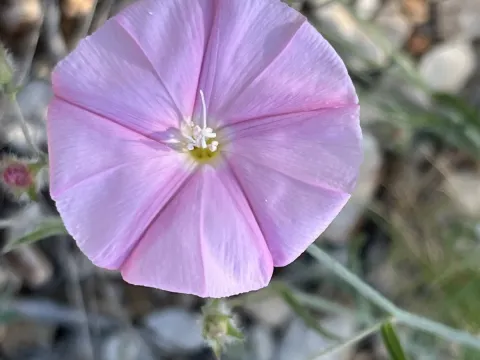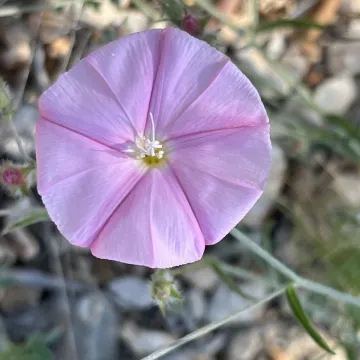

Cantabrian morning glory
Convolvulus cantabrica
Description
The Cantabrian morning glory (Convolvulus cantabrica) is a perennial herbaceous plant belonging to the Convolvulaceae family. Unlike common vining weeds, this species is prized for its ornamental value, forming neat, bushy clumps that are well-suited for rock gardens and xeriscaping projects.
Native to the Mediterranean region and Southern Europe, this plant is naturally adapted to harsh, dry conditions. It primarily occupies rocky slopes, grasslands, and sparse woodlands, where it has evolved to thrive in nutrient-poor substrates and endure prolonged periods of high heat and low precipitation.
Botanically, the plant is characterized by its pubescent (hairy) stems and foliage, which give it a soft, silvery-green appearance. It produces terminal, funnel-shaped flowers in shades of pink or violet-red throughout the summer months. The deep taproot system is an essential adaptation that ensures stability and moisture uptake in challenging environments.
Agricultural and gardening requirements focus on mimicking its natural habitat. The plant demands full solar exposure and exceptionally well-drained soil, preferably with an alkaline or neutral pH. Over-fertilization or heavy, damp clay soils are counterproductive, as they significantly increase the risk of root rot and inhibit the plant’s natural compact growth habit.
While primarily used in ornamental horticulture, the Cantabrian morning glory provides value as a low-maintenance ground cover for arid climates. Regarding plant health, it is generally robust, but gardeners should monitor for aphids during the peak growing season. Furthermore, providing adequate airflow is the most effective preventative measure against common fungal issues like powdery mildew.
Photo gallery