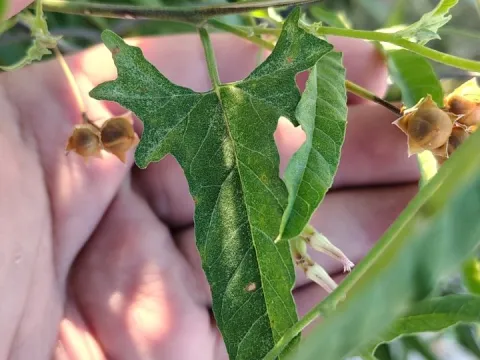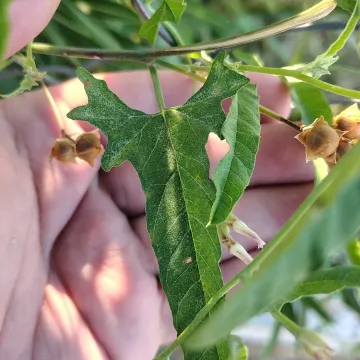

Creeping bindweed
Convolvulus crenatifolius
Description
Convolvulus crenatifolius, known commonly as a type of creeping bindweed, belongs to the Convolvulaceae family. This species is recognized by botanists and agronomists for its robust growth habit and complex root system, which often makes it a subject of study regarding plant competition and management in agricultural ecosystems.
Originating from South America, particularly regions within Argentina, this plant has adapted to diverse climatic conditions. Its ability to spread across various landscapes has allowed it to establish itself in both natural habitats and areas adjacent to managed farmland, where it is often assessed for its potential impact on crop yield.
Botanically, Convolvulus crenatifolius is distinguished by its trailing or climbing stems and characteristically crenate leaf margins. The flowers exhibit the classic funnel shape characteristic of the genus. Its underground root architecture is highly developed, acting as a reservoir for nutrients, which contributes to its resilience against mechanical control measures.
The plant thrives in well-drained soils with moderate to high fertility. In terms of agronomy, managing this species involves a combination of mechanical soil cultivation and targeted chemical intervention. Effective management requires disrupting the root mass to prevent the plant from establishing dominant stands in cultivated fields.
Typical plant health challenges include infestation by pests such as spider mites and aphids, which feed on the foliage and sap. Additionally, fungal pathogens like powdery mildew can affect the plant during humid seasons. Standard agricultural practices involve early identification of these threats to prevent secondary transmission to nearby crops, utilizing a balanced integrated pest management program.
Photo gallery